



Hiring the first employees and building the initial team around them is one of the most critical decisions in a startup’s life. The people who join the company early on shape not only the direction the company will take, but also the organizational DNA that will continue to develop over time.
A structured and well-planned hiring process is essential to ensure that candidates are truly suited for the role. Proper preparation enables decisions based on the traits and capabilities that matter most, clarifies which questions need to be answered during the process, and helps assess whether a candidate meets the core requirements of the role. Investing time in planning the entire hiring process, including interviews and meetings with candidates, significantly improves decision quality and reduces avoidable mistakes.
For this reason, this section of the playbook focuses on the key stages of hiring in a startup, from defining the role and the ideal candidate profile, through managing a candidate pipeline, to making the final hiring decision.
Dive deeper into specific hiring-related topics:




Below are the core stages involved in hiring employees in a startup:
Stage 01
Decide Whether You Actually Need to Hire
Understanding whether there is a clear, measurable business need for hiring is critical before opening a role. Hiring too early, out of pressure, or with unclear goals often leads to unrealistic expectations and costly mis-hires.

Our tips

Don’t hire just because it feels like the next step.
Hire only when there is a clear, measurable business need and when you understand which function is actually missing. In some cases, the need is straightforward: for example, opening an additional Customer Success role once revenue or customer volume crosses a defined threshold. In others, the gap is less obvious. A Sales team of 5 doesn’t necessarily need “another salesperson”. It may need a more specialized role, such as SDR, Partnerships, or Account Management. This is an opportunity to step back and ask: What is the real bottleneck in how work gets done today? What capability is missing?

Remember:
As a startup grows, roles naturally evolve and become more specialized.
Early on, you often need generalists who can own a process end to end. This provides broad coverage and speed, even if depth at each stage is limited. As the company scales, the bottlenecks shift. What once required one versatile person may now justify focused expertise hiring for a specific part of the process rather than for end-to-end ownership.
Define success metrics.
Be explicit about what success looks like in the role and set clear milestones (”this is what I expect to see after six months and twelve months”).
These goals can be both quantitative and qualitative.
For example, a quantitative target might be hitting a specific quota or achieving defined conversion rates across the funnel stages. Qualitative objectives might include creating smoother handovers between sales and customer success, or mapping and establishing the operational foundations/workflows/methodologies required to support the company’s next stage
Be realistic about what one employee can achieve.
Startups tend to operate lean and look for talented people who can wear multiple hats. The risk begins when strategic needs are translated into overloaded roles that combine multiple distinct functions, creating an unrealistic and overly specific profile that extends recruitment timelines and increases hiring costs.
Freelancers and contractors
If you’re unsure whether to hire now, consider freelancers or contractors first to test the need.
Stage 02
Define the Role and the Ideal Profile
Defining which skills and traits truly matter, and what trade-offs are involved is essential for making informed hiring decisions. Clear role definition reduces gut-based evaluations and keeps the process focused on what is actually required.
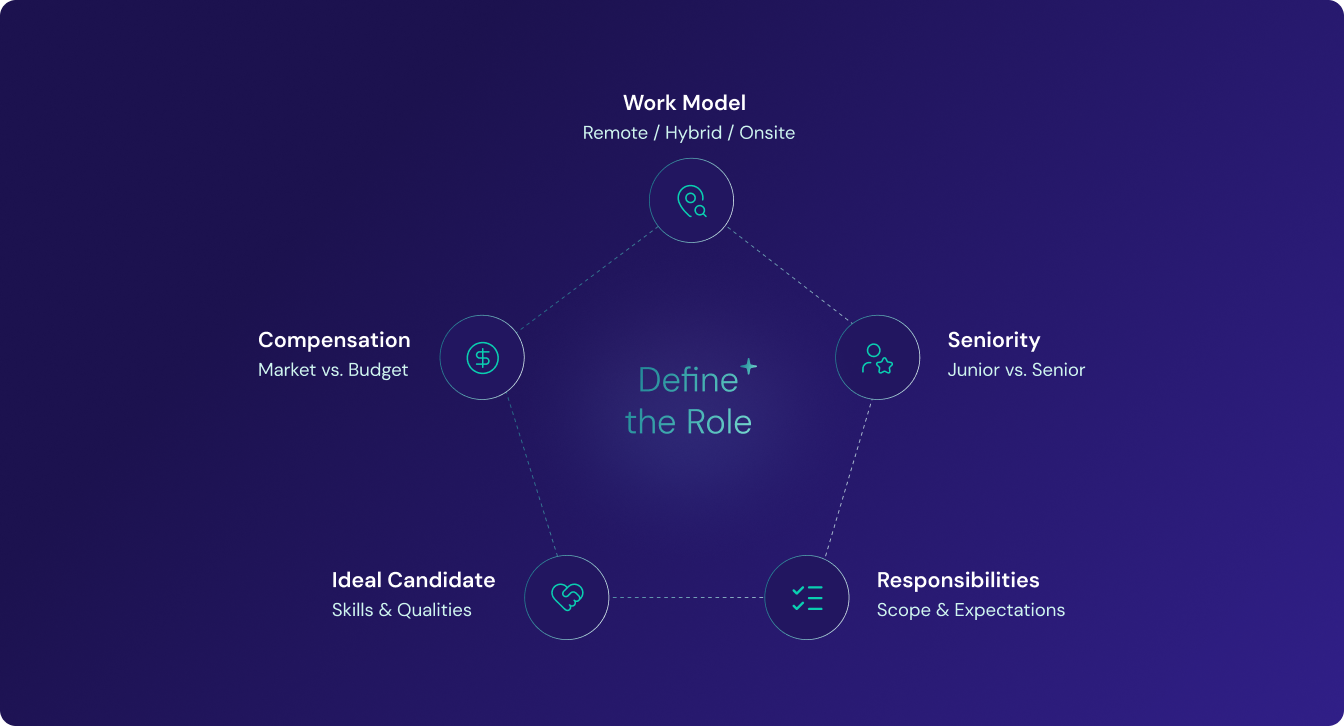
It is important to pause and clearly define the position before hiring, focusing on the key needs and characteristics of the role. That includes:

Where does the employee need to be located?
In a post-COVID world, should the role be based locally, or can it be filled remotely? Does the role require in-office presence, or is a hybrid or remote setup viable?

What level of seniority makes sense for the role, given the scope of responsibilities and the available budget?
The company needs to evaluate whether now is the best time to hire independent but costly senior employees vs. junior candidates with growth potential that needs managerial attention.

What are the core responsibilities of the role?
This helps identify whether expectations are realistic or whether the role is effectively combining more than one position.
For a deeper discussion of this step
see Questions to Ask Before Opening a Position

Ideal Candidate Profile?
Define the top 5 characteristics of the ideal candidate to support alignment between different evaluators involved in the process.

Benchmark salaries
Benchmark salaries by defining a compensation range that balances market standards with your available budget, and by being clear about any gap between the two. This helps you understand how competitive your offer is and whether it is likely to attract strong candidates. If you plan to pay below market, be explicit about it and consider how you will compensate for that gap.
30% Employer Cost
When budgeting, factor in the full employer cost, which is typically around 30% higher than the employee’s gross salary.
Benchmarking tools
Use free salary tables from leading recruitment agencies or paid salary benchmarking tools such as Zviran, Compete, and Pave.
Recruiting Agencies
If working with a recruiting agency, consult them, but remember they often recommend higher salaries.
Stage 03
Plan and Prepare Towards the Hiring Process And its Stages in Advance
Designing the hiring process in advance, including stages, responsibilities, assessments, and legal boundaries, prevents inefficiency and candidate drop-off. A structured process helps teams move faster while maintaining consistent evaluation standards.

Using an applicant tracking system (ATS) helps manage candidates and keep the process structured. This can be done with dedicated tools such as ATS (applicant tracking system) or with simpler, free solutions like a Google Sheets recruitment template.
Define the hiring stages by clarifying who is involved in the process, what each stage includes, and how candidates are evaluated.
Limit interviews to up to four rounds, and assign a specific focus area to each interviewer to keep evaluations clear and consistent.
Decide in advance on practical assessments, such as work samples or role-specific tasks, to evaluate fit from both sides. Keep assignments focused and proportionate to the role. Avoid overly demanding exercises, especially in early-stage hiring.
Be available. Long gaps between hiring stages may cost you strong candidates. In addition, structure an efficient process to avoid wasting effort for both sides.
Anticipate the key challenges of the role and use them to shape your interview focus, assessing how the candidate is likely to cope with the realities of the position.
Be familiar with local employment laws and understand which questions are prohibited in job interviews. For example, in Israel it is not permitted to ask candidates about their marital or family status.
Stage 04
Create a Clear and Market-Aligned Job Description
Translating the role into a clear and market-aligned job description directly affects the quality and relevance of incoming candidates. Inaccurate titles or overloaded requirements tend to repel strong candidates and slow down the hiring process.
Do’s

-

Focus on core responsibilities
-
Use industry-standard titles
-
Describe real challenges
Don'ts

-

Overloaded requirements
-
Misleading titles
-
Generic requirement lists
Job title matters
Keep them clear, relevant, and aligned with industry standards. Use market research, such as reviewing similar roles on LinkedIn, to identify the right title and keywords. Inaccurate or misleading titles can deter the right candidates, and even small changes can make a significant difference, for example shifting from Account Manager to Customer Success.
Outline key responsibilities
Instead of listing requirements, describe the role’s challenges to make it more engaging.
Avoid overloading
the description with excessive requirements. Non-essential criteria can discourage strong candidates from applying, particularly qualified women, who are more likely to self-select out when they do not meet every listed requirement.
Stage 05
Build a Candidate Pipeline
Reaching the right candidates requires deliberate channel selection and active pipeline management, not just posting a job and waiting. A focused sourcing approach improves signal quality and reduces noise in the funnel.

Create a dedicated hiring email address
Use an address like [email protected] for CV submissions to organize communications and simplify record-keeping.
Identify target companies
Create a list of relevant companies, including competitors and industry leaders, to source candidates
Use employee referrals
Employees often recommend strong candidates who fit the company culture, leverage their network to source candidates.
For more practical tips, read our
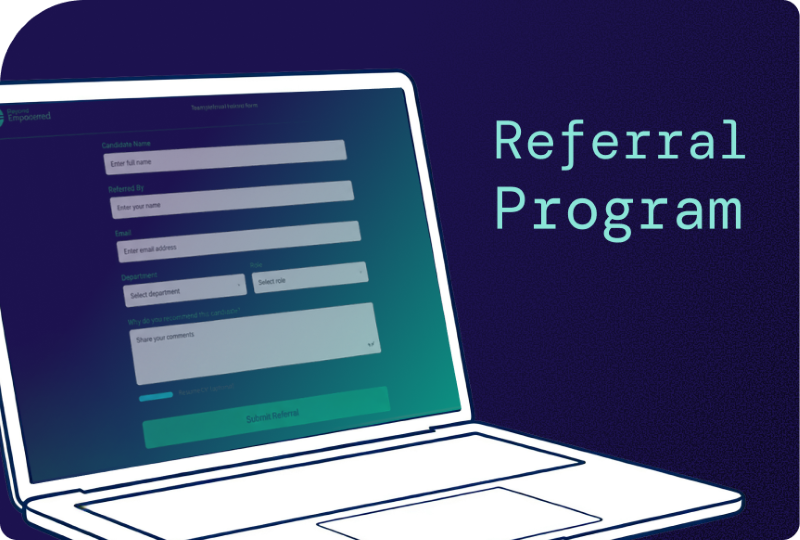
“Step-by-Step: Creating an Effective Referral Program” guide
Leverage LinkedIn and niche job boards
LinkedIn offers free job postings for a few days before switching to a PPC model, with costs varying by location and role.
Join relevant Facebook, Whatsapp and LinkedIn groups that feature weekly job posting threads for targeted reach
Track industry layoffs and talent availability
Follow this https://www.lastartup.co.il/layoffs to track industry layoffs and source relevant candidates.
Stage 06
Screen, Interview, and Conduct Reference Checks
Evaluating candidates through structured interviews, practical exercises, and reference checks helps assess both performance and working style. Past behavior and external validation provide more reliable signals than hypothetical answers alone.

Ask behavioral and situational questions during interviews
As past performance is often a strong indicator of future success. Use prompts such as “Tell me about a time when you…” rather than hypothetical questions like “How would you react if…”.
For a deeper explanation of how to conduct behavioral interviews, see
How to Interview Candidates in a Way That Predicts Role Fit.
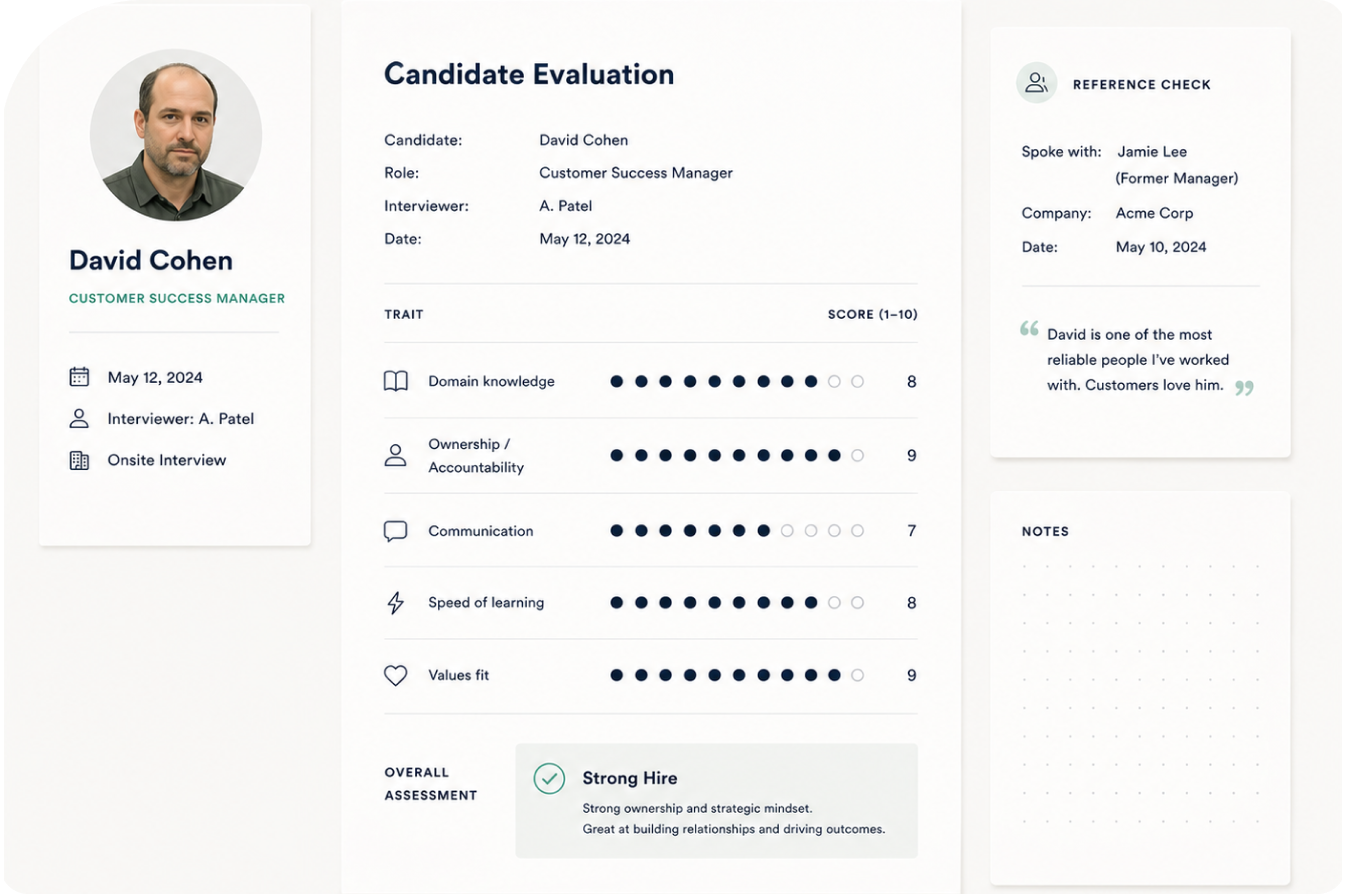
Use a scorecard to evaluate candidates consistently
by rating up to five key traits on a 1–10 scale and avoid gut-based decisions.

Respect candidates’ time
Move quickly. Remember, top talent won’t wait.

Differentiate your company during interviews and conversations with candidates
Since startups often cannot compete on salary alone, emphasize your unique value, such as impact potential, growth opportunities, or opportunities for rapid career development.

Request two to three references, preferably from previous managers or direct supervisors
When conducting backchannel reference checks, be mindful of candidate privacy, especially for confidential roles.

Prepare focused reference check questions
prepare focused questions that address specific concerns rather than conducting a generic reference call. For recommended questions and guidance on what each question helps uncover, see Must-Have Candidate Reference Check Questions.
Stage 07
Make the Hiring Decision
This is the point where all inputs from the previous stages need to come together into a single, deliberate decision, not a rushed conclusion. Balancing skills, culture fit, and risk is essential when making the final hiring decision. Rushing to close a role out of pressure often results in higher long-term costs than waiting for the right candidate.

Pay attention to red flags. Trust your instincts about lack of enthusiasm, inconsistent work history, or communication issues.
Don’t rush into hiring just because you’re feeling desperate and swamped. In some cases a bad hire costs more than waiting for the right one.
Consider culture fit alongside skills. While skills can be taught, attitude and values are harder to change. Consider your team’s dynamics to prevent potential conflicts.
Disclaimer: This playbook is provided for general informational purposes only and does not constitute legal advice or create an attorney-client relationship. Employment laws vary by jurisdiction, and founders should consult a qualified employment attorney before acting on any hiring, termination, or other HR decisions discussed here.