


The goal of this chapter is to highlight that talent management is a serious matter, and that feedback conversations are one of its core tools in early-stage startups. At the same time, the way these conversations are implemented can be customized to fit the company’s culture, management style, and organizational goals
The performance review process is one of the most common tools used to manage and retain talent. talent management used to describe the employee lifecycle, from onboarding to departure, with personal and professional development taking place in between.
Talent management is relevant at every level of the organization, from junior employees to senior leadership.
The performance review is based on conversations about the past year’s performance, where both sides – employee and manager – share their experience: what worked, what didn’t, and what they expect going forward. A performance review creates a recurring process, typically annual or biannual, and a dedicated space for a broader conversation that goes beyond day-to-day routines. It allows both sides to step back, reflect, and bring their feedback into a shared, structured discussion.
Over the years, performance measurement has often been associated with “corporate” culture, almost as a negative label for everything that feels opposite to a startup mindset. Different companies have tried to crack how to do this well, in a way employees are genuinely willing to take part in, that leads to meaningful insights and growth, and that is continuous rather than a disconnected, once-a-year event.

Here are a few reasons why performance reviews matter

To give employees a clear, high-level understanding of how they are perceived by their managers
Day-to-day conversations often focus on specific incidents or immediate issues. A performance review creates a structured moment to step back, look at the bigger picture, and reflect beyond what happened in a particular situation. In fast-moving startups, this pause is especially important.

To clarify expectations and goals.

To better understand employees’ professional aspirations and how they view the organization
These conversations create a controlled space to surface issues early, before they grow into something larger. They help you as a manager understand what might be sensitive or unresolved, and reduce the risk of being surprised by an unexpected resignation in the future. Remember – usually, conflicts that are skipped don’t disappear. They tend to return later, deeper and harder to manage.

Employee retention
Strengthening a positive employee experience and supporting ongoing professional growth.

Context for compensation decisions
When salary increases, bonuses, or other benefits are on the table, the performance review creates the appropriate context to clarify what is awarded, on what basis, and why.

Industry norm and employee expectations
In many companies, performance reviews are standard practice, and employees expect a structured review process.
IN SUMMARY
The performance review process creates a structured moment to bring employees into the conversation and genuinely ask for their input.
Day-to-day work often flows top-down, while the review opens space for employees to share how they see things, and for leadership to learn, whether it’s a different perspective or insight into how organizational decisions are experienced on the ground.
The effectiveness of the process depends largely on managers’ ability to listen, absorb feedback, and engage in an open, thoughtful discussion. Questions like, “Do you think focusing on task X is the right priority for the team or the company at this stage?” can surface important insights. At times, these conversations also allow managers to share parts of the broader context employees may not see, explain the reasoning behind decisions, and reconnect people to the underlying purpose.
Quick Performance Review Q&A
- What does the performance review process look like in practice?

In most cases, both the employee and the manager complete a questionnaire separately. Employees are usually given one to two weeks to fill out the questionnaire. Managers then have a similar timeframe to complete their part and schedule a review meeting.
The questionnaire breaks down the employee’s performance across several dimensions and enables a detailed discussion of each aspect of the role. This often includes 1–5 rating questions, such as:
“How would you rate your overall performance this period?”
“How well did you collaborate with others to drive shared goals?”

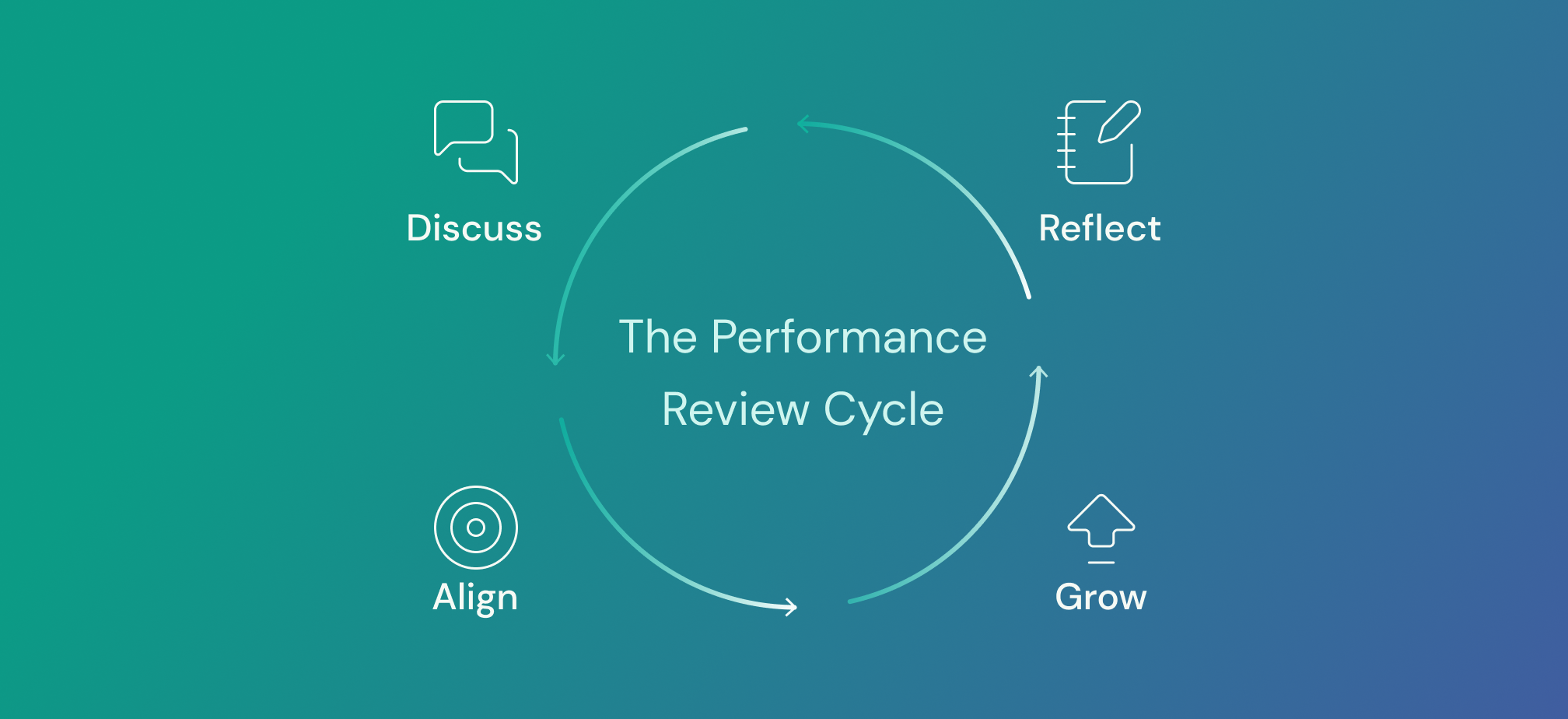
After filling the questionnaire, the employee and manager meet to discuss the responses, dive deeper into areas where they identify gaps, and align on a plan for the period ahead.
Suggested course of the meeting:
Review together the past period since you last met Did the employee achieve his/her goals? (delivery and quality)
Take the time to sync and make sure you are aligned
Discuss what went well, what did not
Align on goals and tasks for the next period of time
Ask how can you help reach these? offer to help (remove blockers, professional training, etc.)
Pulse check – how does the employee feel?

After the review meeting, managers typically update their own manager and HR on the outcomes of the process for their team.
The outcome of the meeting is alignment
The employee should leave the conversation with clarity around What is expected of me? How am I performing?
In many organizations, the review process also leads to changes in the employee’s terms, such as salary increases, bonuses, or equity grants.
It’s important to document the process and its outcomes, and to revisit them when preparing for the next review cycle.
- When are performance reviews typically conducted?
Traditionally, many organizations hold performance reviews once or twice a year. They are often timed toward the end of the calendar year, when it’s natural to look back on the year’s performance and set goals for the year ahead
- Who Is Responsible for the Process?
HR is responsible for designing and leading the performance review process. This includes guiding both managers and employees, and making sure the process is executed on time.
- What adjustments can be made to a performance review to fit a company’s character and needs?

Today, companies tailor performance reviews in different ways, depending on who they are and what they want to achieve through the process. For some, the goal is to identify and retain top performers. For others, it may be to spot underperformance, or simply to establish a shared management routine because “this is how it’s done.”

The focus of the performance review can be retrospective, looking back at the past year, or forward-looking, centered on planning the year ahead. In the latter case, it is common to derive individual goals from team-level and company-level objectives.

The process itself can also vary. It may take the form of a one-on-one conversation between the employee and their direct manager. In other cases, it can include 360-degree feedback, gathering input from the employee’s key interfaces across the organization. Sometimes the discussion is facilitated by a department head, with both the employee and the direct manager present.

Finally, a performance review does not have to rely on a formal questionnaire, nor does it have to focus solely on the employee’s performance. It can also open space to discuss the manager’s role, team dynamics, or broader organizational challenges. The evaluation can be done through an open, honest conversation. The goal is to foster a dialogue where the employee hears how they’re perceived by the organization and can also share their own feedback.

That said, questionnaires can help structure the process and give both sides time to reflect and come prepared for a more effective conversation.
You can also say to an employee:
“Here’s the questionnaire. No pressure to fill it out, but it’s worth reviewing in advance so you’re ready for the discussion.”
Here’s an example of a simple questionnaire that includes a
“cheat sheet” to help employees who aren’t used to expressing
themselves in more nuanced terms.
Are you a manager preparing for a performance review conversation?
For a deeper discussion of this step
See section Manager Preparation for Effective Performance Review Conversations in our playbook for practical preparation, including the right questions to ask and how to get real value out of the process.
Disclaimer: This playbook is provided for general informational purposes only and does not constitute legal advice or create an attorney-client relationship. Employment laws vary by jurisdiction, and founders should consult a qualified employment attorney before acting on any hiring, termination, or other HR decisions discussed here.