Summary
Healthcare AI is advancing rapidly, but building a successful startup requires more than innovative technology. Industry leaders share insights on market validation, healthcare economics, and turning AI solutions into commercially viable businesses.
Healthcare AI presents an interesting paradox: the technology is advancing faster than the industry can adopt it. Startups can now simulate clinical trials, automate complex medical workflows, and analyze information that was previously inaccessible. Yet even technology that genuinely improves patient care can struggle to become a successful business.
Why? Because healthcare innovation involves more than solving a clinical problem. It requires understanding who benefits, who pays, what drives adoption, and where the real economic incentives lie.
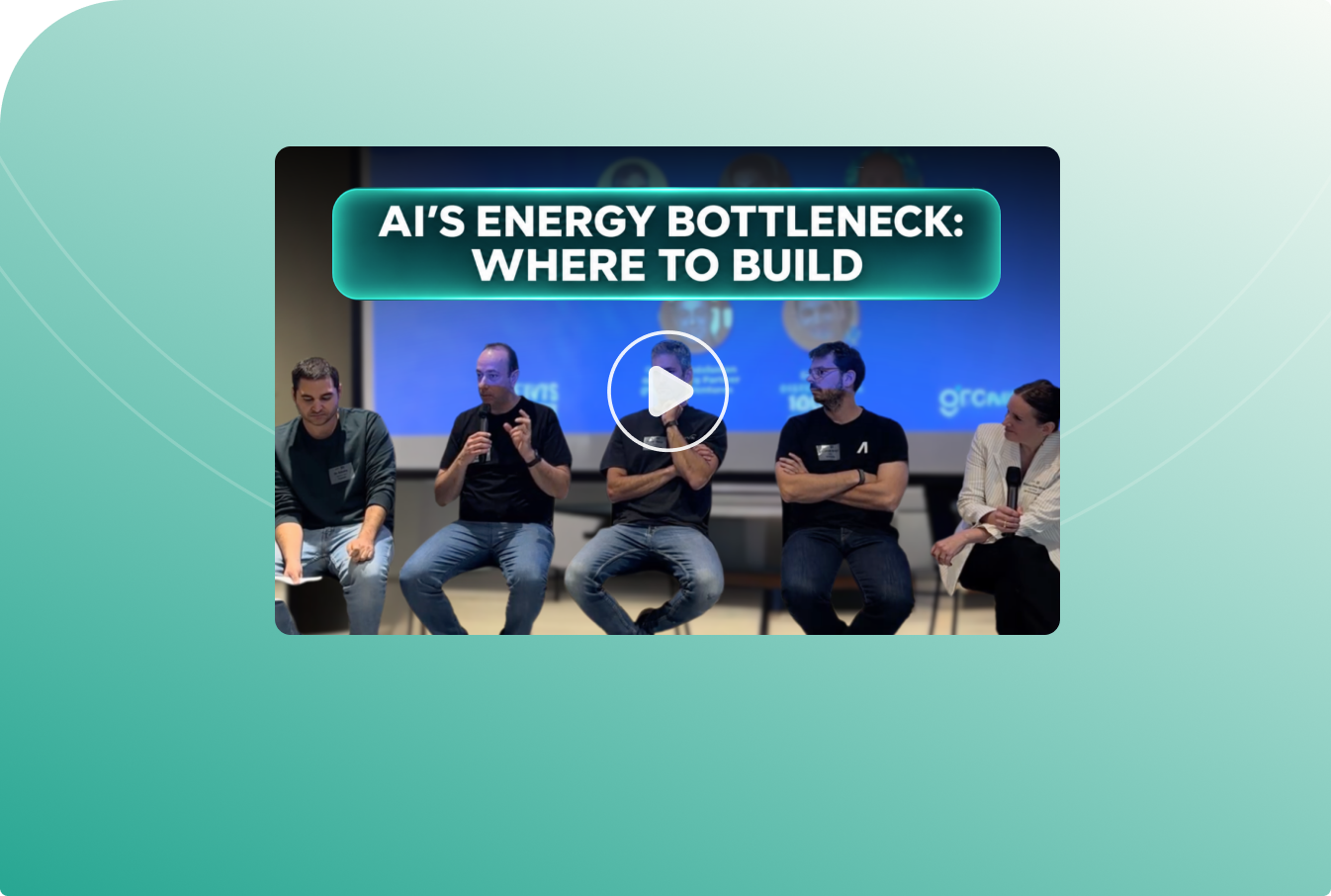
These questions were at the center of a recent meetup hosted by Grove Ventures and Pitango, bringing together founders Arnon Horev, Co-Founder of QuantHealth, and Yaron Blinder, PhD, Co-Founder and CTO of Diffusion Health; Niva Segev-Amzaleg, PhD, of Teva Pharmaceuticals; and investors Renana Ashkenazi, Managing Partner at Grove Ventures, and Hila Karah, Managing Partner at Pitango HealthTech.
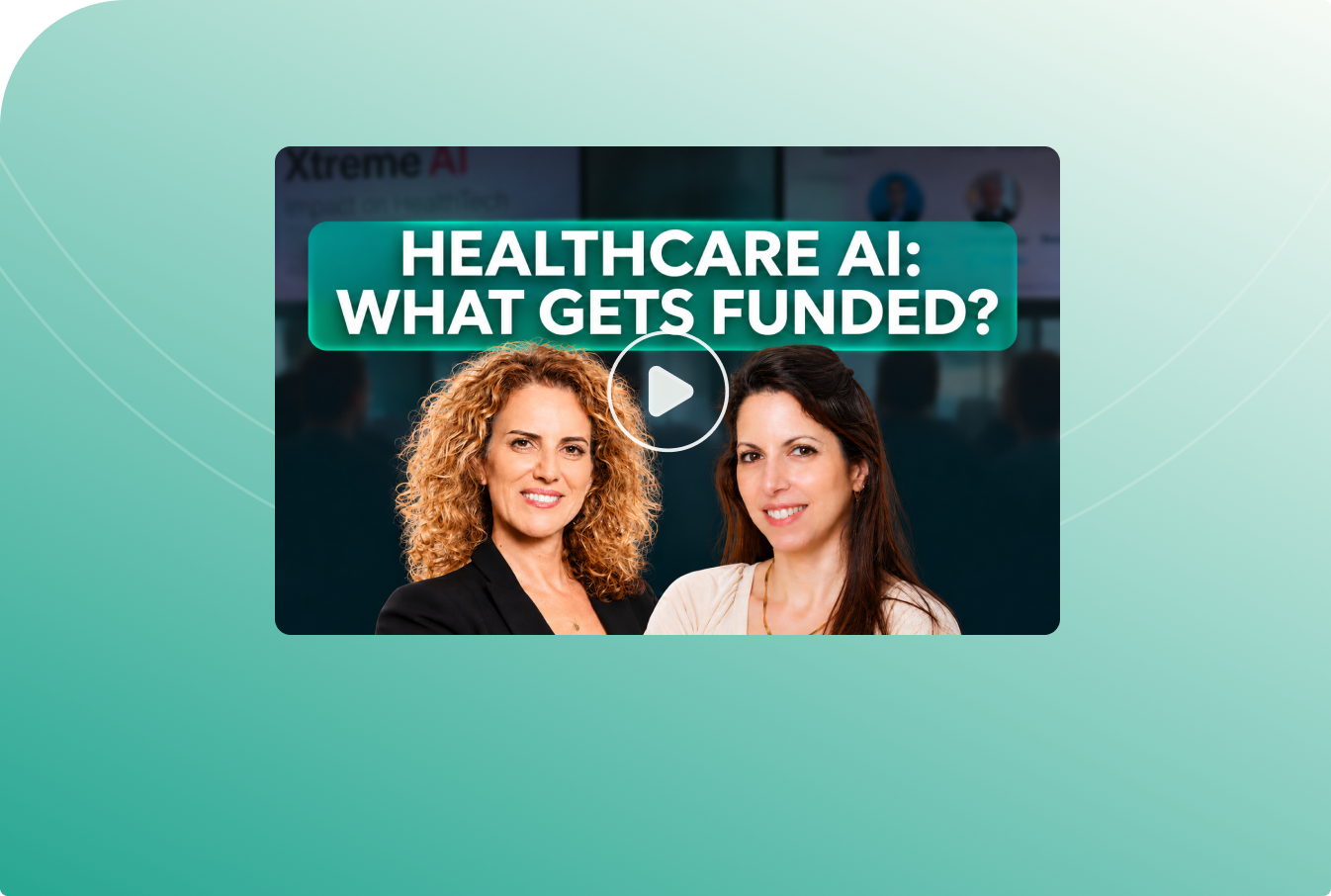
Watch highlights from Renana and Hila’s investor conversation, then explore five key lessons from across the meetup below.
A good healthcare product doesn’t automatically make a good healthcare business.
During the investor conversation, Renana Ashkenazi, Managing Partner at Grove Ventures, highlighted a recurring challenge: founders often enter healthcare with a genuine desire to improve people’s lives, but underestimate the complexity of turning clinical value into a sustainable business.
A solution might save physicians time, improve patient outcomes, or reduce unnecessary procedures. The critical question is whether those improvements create enough economic value for someone to pay for them.
For Renana, one of the most compelling slides in an early-stage pitch deck is evidence of real market validation. Founders don’t necessarily need significant revenue at seed stage, but they should demonstrate meaningful engagement with potential customers and a clear understanding of their needs.
Three questions are particularly important:
Grove’s portfolio offers examples of these principles in practice. Opmed.ai has demonstrated the financial impact of optimizing operating-room scheduling through real hospital deployments. Navina, which integrates AI-powered clinical intelligence into physicians’ workflows, reported reaching more than 20,000 clinicians and care team members across over 1,300 clinics as of November 2026.
Both illustrate the importance of building technology around problems healthcare organizations recognize, with value they can measure.
For pharmaceutical companies, some of AI’s greatest value lies in reducing uncertainty and helping teams make critical drug-development decisions faster.
Niva Segev-Amzaleg, PhD, of Teva Pharmaceuticals, explained that drug development can take 10–15 years, with important decisions made throughout the process. Reducing the time between those decisions can create significant value, but founders must first understand which problems pharmaceutical companies actually need help solving.
Niva highlighted a common mistake startups make when approaching healthcare customers: arriving at meetings eager to explain their technology and everything it can do, without first listening to the customer’s challenges.
Founders need to understand the problems customers are trying to solve today, rather than assuming they already know what those customers need. That means asking questions, listening carefully, and identifying where technology can create measurable value.
Niva also emphasized that pharmaceutical companies need solutions that are ready to implement, operate securely with sensitive patient data, and provide sufficient transparency and validation. A promising model requiring two more years of development is a very different proposition from a solution ready for a real-world pilot.
For founders, the lesson is to understand which decisions a customer needs to make faster or better, and demonstrate how their technology makes that possible.
Clinical trials are expensive, lengthy, and full of uncertainty. At our meetup, QuantHealth and Diffusion Health illustrated two ways AI is addressing these challenges: improving decisions before trials begin and reducing the operational complexity of running them.
While QuantHealth focuses on trial design, Grove Ventures portfolio company Diffusion Health tackles the operational barriers that prevent healthcare practices from participating in clinical research.
Yaron Blinder, PhD, Co-Founder and CTO of Diffusion Health, explained how regulatory documentation, training, and administrative requirements can make opening new clinical trial sites a process lasting 8–12 months. Diffusion Health uses AI agents to automate much of this work, with the aim of making practices research-ready within weeks.
The company’s approach also illustrates an important shift in business models. By automating substantial portions of the work itself, AI enables companies to deliver completed services rather than simply providing software tools, creating opportunities to charge based on results.
Arnon Horev, Co-Founder of QuantHealth, presented how the company uses AI to simulate clinical trials, helping pharmaceutical companies predict outcomes and optimize protocols before enrolling patients.
The platform draws on data representing 350 million patients and has simulated more than 600 clinical trials, achieving up to 90% endpoint prediction accuracy, according to the company.
The value lies in identifying potential problems earlier, whether in patient selection, trial design, or clinical endpoints, while pharmaceutical developers still have the opportunity to adjust protocols before committing significant resources.
Even when a product delivers clear clinical benefits, adoption can fail because the incentives across the healthcare system don’t align.
Renana Ashkenazi, Managing Partner at Grove Ventures, emphasized the importance of understanding three stakeholders in the U.S. healthcare market: payers, providers, and regulators.
A technology might benefit patients while creating additional costs for hospitals, or save insurers money without giving providers a financial reason to adopt it. Even FDA clearance, when required, doesn’t automatically guarantee reimbursement, since regulatory authorization and insurance coverage involve separate decisions.
Understanding these relationships is essential to building a realistic healthcare go-to-market strategy. Founders need to identify who receives the clinical benefit, who carries the cost, and what would motivate the relevant decision-makers to adopt their solution.
To help founders navigate the U.S. market, Grove developed US Health Market, Decoded: A Practical Glossary for Israeli Founders, part of Founder OS. It explains how reimbursement, purchasing decisions, regulatory pathways, and economic incentives shape healthcare adoption.
As AI models become increasingly accessible, technological capabilities alone offer less differentiation. One opportunity highlighted by Renana Ashkenazi, Managing Partner at Grove Ventures, is physical healthcare data generated beyond conventional medical records.
Sensors, telemetry, operating-room systems, and advanced wearables can capture information about patients and clinical environments that traditional records cannot.
Companies capable of collecting and interpreting this data could develop more differentiated products and create a reinforcing cycle: better data improves the technology, which generates further insights.
This intersection of Physical AI and healthcare opens opportunities beyond the text, images, and structured records that dominate many existing applications.
As AI becomes capable of interpreting more real-world information and supporting clinical decisions, the role of human judgment becomes an increasingly important question.
When asked whether healthcare will still need humans in the loop as AI advances, Renana emphasized that people are more than the sum of their measurable indicators. Clinical judgment involves context, uncertainty, and individual circumstances that cannot always be captured by data.
Human oversight must also be meaningful. A physician asked to approve hundreds of AI-generated decisions without sufficient time to evaluate them risks becoming a rubber stamp.
For founders, the challenge is designing systems that balance automation with appropriate clinical judgment, explainability, and accountability. The opportunity is enormous, but so is the responsibility.
AI is changing how quickly startups can build products and which problems they can tackle. Yet generating clinical evidence, earning trust, navigating regulation, and convincing healthcare organizations to adopt something new still take time.
At Grove Ventures, we’re particularly interested in founders who understand both sides of this challenge: the technology deeply enough to create something new, and the healthcare system well enough to make it work in practice.
Building at the intersection of AI and healthcare? We’d love to hear what you’re working on.