You’ve picked the perfect name for your startup, the logo looks fantastic, and your co-founder has already spent the weekend building the website and ordering branded hoodies.
Just when everything is coming together, you discover that another company owns the trademark. Or that another startup is already using the same name. Or that your carefully chosen name means something rather unfortunate in one of the markets you’re planning to enter.
A startup name quickly becomes much more than a name. It ends up on your website, logo, pitch deck, product, LinkedIn page, contracts and, if things go well, in the minds of customers and investors.
Which is why it’s worth asking a few questions before you commit to it.
Is someone else already using it? Can you legally protect it, or does someone else hold a relevant trademark that could force you to rename? Is the domain available? Can people spell it after hearing it once? Does it mean something unfortunate in another language? And will it still make sense if your company looks very different in five years?
Grove’s Name Stress Test, the new tool launched today as part of Founder OS, is designed to help founders answer those questions early, when changing a startup name is still relatively painless.
A name can feel like a small decision when you’re starting out, but in reality, you’re about to build a lot on top of it.
Your domain, website, logo, deck, social accounts and email addresses will all carry that name. Eventually, customers, investors and candidates begin to recognize it too.
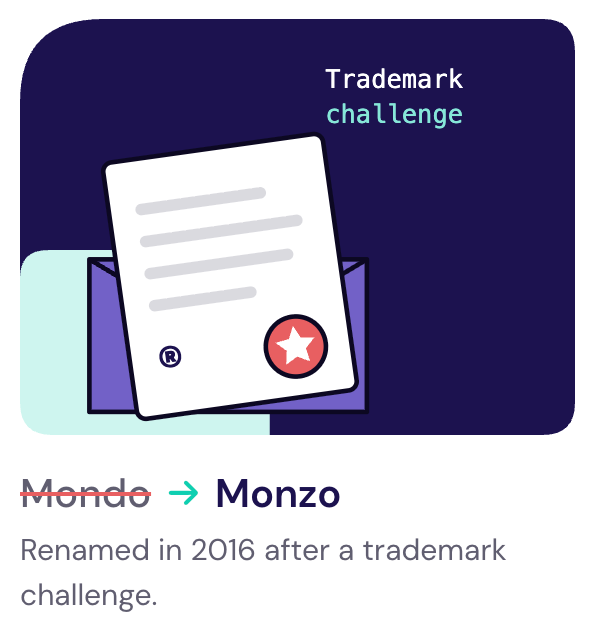
At that point, changing the name is no longer a quick edit, and startups do rename: UK digital bank Mondo became Monzo in 2016 after a trademark challenge from another company with a similar name.
The project management platform Clubhouse had a different problem. When the unrelated Clubhouse audio app exploded in popularity, sharing a name became increasingly difficult. The project management company eventually became Shortcut.
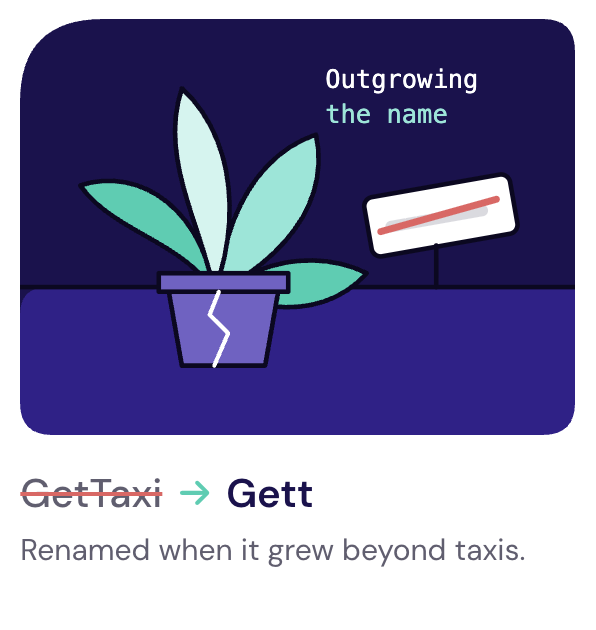
Then there are names companies simply outgrow. GetTaxi became Gett as it expanded beyond taxis, while Taxify became Bolt as its ambitions expanded beyond its original service.
These companies renamed for different reasons, but the lesson is the same: it’s easier to discover a naming problem before you build a company around the name. Try the Name Stress Test.
A domain search is a good start, but it’s only one part of the picture. Here are eight things worth checking:
1. Does someone already own something similar?
A trademark issue is one of the more serious reasons a startup may need to rename, and the names do not necessarily need to be identical for there to be a potential conflict.
Before committing, it’s worth checking for relevant trademarks in the markets where you plan to operate.
2. Is another company already using the name?
Even without a trademark problem, sharing a name can create confusion.
If customers search for you and find three other companies first, you have a discoverability problem. If one of those companies suddenly becomes famous, you may have a bigger one.
3. Is the name distinctive enough?
A name that simply describes what your startup does may sound sensible, but highly generic or descriptive names can be difficult to protect.
A strong startup name does not have to be strange. It should, however, give you a chance to build an identity that is recognizably yours.
4. Can you get a sensible domain?
The exact .com is not the only domain option for a startup, but domain availability is still something you want to understand before committing to a name.
If the obvious domain is taken, check alternatives such as .ai, .io and .co, as well as sensible variations.
5. Does the name work in other languages?
Software travels quickly, but names sometimes travel less gracefully.
An innocent word in one language can sound odd, amusing or downright unfortunate in another.
If international expansion is part of the plan, checking important languages early can prevent an awkward discovery later.
6. Will you outgrow it?
Startups change, and the product you launch first may eventually become just one feature in a much larger company. You might enter new markets or serve entirely different customers.
A name tied very closely to your first product, geography or use case can eventually become limiting.
You cannot predict your company’s future, but you can give it some room.
7. Can people say and spell it?
Try this simple test: say the name aloud and ask someone to type it. If they get it right, great. If you need to explain that there are two Ys, no vowels and a silent Q, perhaps run the test again.
Names travel through conversations, podcasts, introductions and recommendations, so a name that is both memorable and easy to find afterwards has a clear advantage.
8. Are the social handles available?
This probably shouldn’t decide your entire naming strategy, but it is worth knowing.
Check the major platforms before launch. Otherwise, you may discover that your beautifully consistent brand is about to become companyapp on one platform, getcompany on another and realcompanyofficialhq somewhere else.
We built Name Stress Test to bring these checks together.
It’s part of Grove Founder OS, our collection of experience-based tools for founders to build and grow their startups.
Enter the name you’re considering and, optionally, a short description of what your company does and where it plans to sell. That context helps make the results more relevant: another company with the same name matters much more if it operates in your field.
Name Stress Test then looks at:
* trademarks in the US, EU and Israel;
* companies, apps and projects with similar names;
* trademark strength;
* .com, .ai, .io and .co domains;
* meanings and sound-alikes across 13 languages;
* how well the name fits the company and its potential growth;
* pronunciation and spelling; and
* key social handles.
You get an overall verdict: Keeper, Consider or Rename risk, followed by the most important findings and practical next steps.
The idea isn’t to produce a complicated legal report. It’s to tell you, in plain language, what deserves your attention.
You can also download the results as a PDF and send them to your co-founder.
If you’re still staring at a blank page, Name Stress Test can help with ideas.
Describe your company or share your deck, and the tool generates possible names and screens them for factors including domain availability, pronunciation and relevant live trademarks. You can then take your favorites through the full test.
It won’t choose your startup name for you, so that argument remains yours to enjoy.
There is no perfect formula for choosing a startup name, and ultimately, it needs to feel right for the company you want to build.
But before you invest in the logo, website, launch and branded hoodies, it helps to know whether there are obvious problems hiding behind it.
Name Stress Test is a first screen, not legal clearance or a substitute for advice from a trademark attorney. For important markets, it’s also worth testing a name with native speakers.
Those steps are much easier to take before your name is everywhere, so before you build on it, stress test it.
Test your startup name here.
And explore more Grove Founder OS tools, built from experience to help founders build and grow their startups.
Start by checking relevant trademarks, companies using the same or similar name, domains, app stores and social platforms. You should also consider pronunciation, international meanings and whether the name is distinctive enough to protect. Name Stress Test brings these first checks together in one place.
Yes. A trademark check can identify potential conflicts before you invest heavily in a brand. However, an automated search is only a first screen. Before committing to a name, particularly when trademark protection is important, consider obtaining a professional clearance search and advice from a qualified trademark attorney.
No. Domain availability tells you only whether that particular domain is registered. It does not tell you whether another business is using a similar name or has relevant trademark rights. A startup name check should consider trademarks, competing companies, domains, international meanings, pronunciation and future brand fit.
Not necessarily. Many companies begin with another domain extension or a variation of their brand name. But checking the .com is still useful because it can affect discoverability, word-of-mouth traffic and future branding decisions. Name Stress Test also checks .ai, .io and .co and can look for alternative domain versions.
The best time is before you invest heavily in it: ideally before buying an expensive domain, commissioning branding, building a website or publicly launching. If you already have a name, checking before a funding round, major launch or international expansion can still be useful.
There is no formula for a perfect startup name. Generally, founders should consider whether the name is distinctive, easy enough to say and spell, suitable across important markets, legally usable, available online and broad enough to accommodate the company’s future direction.
No. Name Stress Test is a first screen, not legal clearance or legal advice. It can surface potential issues and questions worth investigating, but founders should consult a qualified trademark professional before relying on a name where legal clearance or protection matters.
Grove does not store the names, company descriptions, uploaded files or results submitted to Name Stress Test. To perform the checks, information needed for the query is sent to public registries, search services and the AI provider used by the tool.