Explore Founder OS: AI tools to help you build faster
Founder OS Founder OS


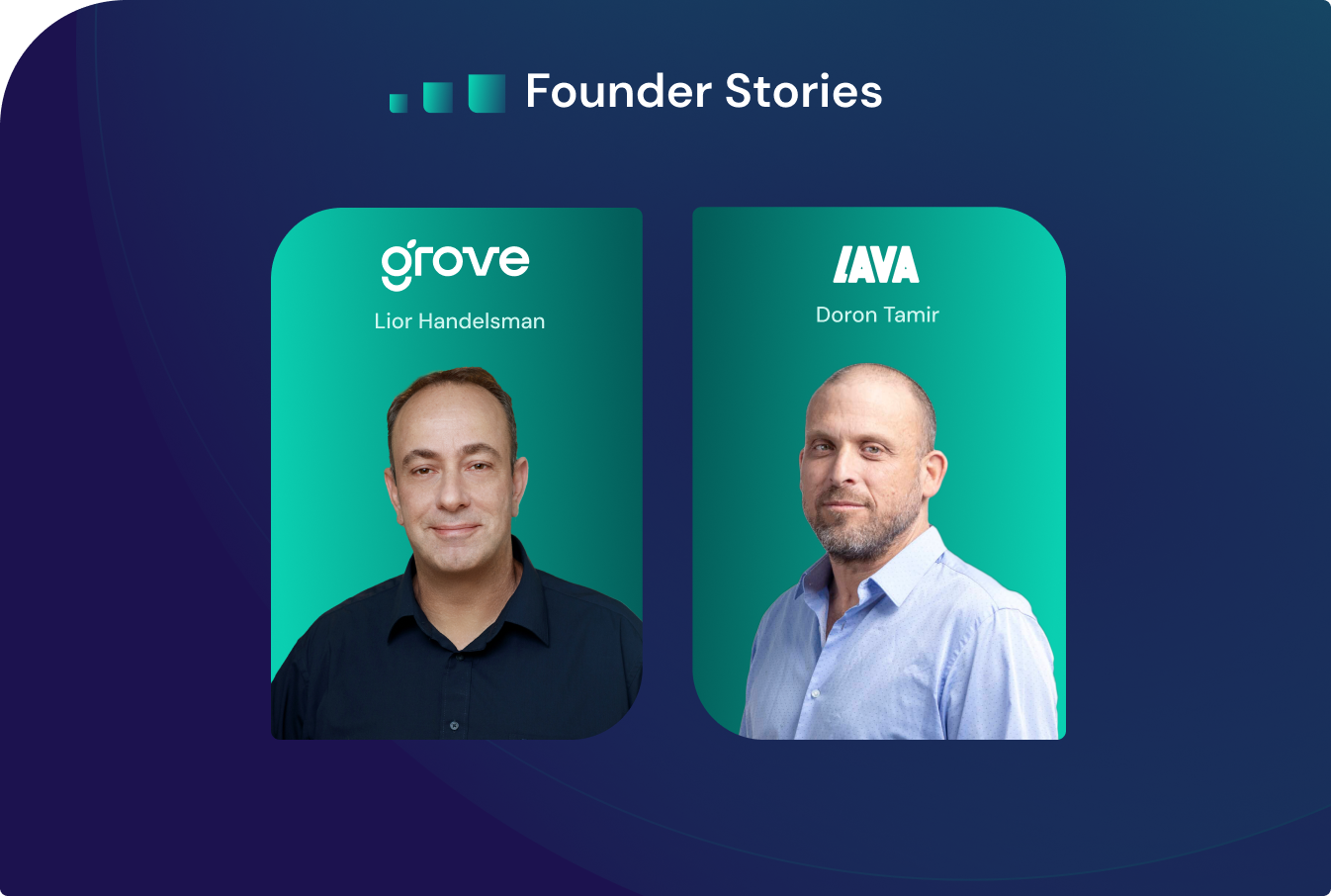
A Grove Talk conversation with Doron Tamir, Co-Founder and CEO of LAVA, and Grove Ventures’ Lior Handelsman on rethinking power generation and the ambition to build technology that could change the world.
Doron Tamir could have stayed in solar for the rest of his career. After a decade building one of Israel’s largest solar project development companies, he chose instead to start over and pursue an idea that many in the industry dismissed.
The ambition for LAVA was to do something Tamir believed solar alone could not: make energy stable, dispatchable and available around the clock by rethinking one of the oldest problems in power generation, how heat becomes zero emission electricity.
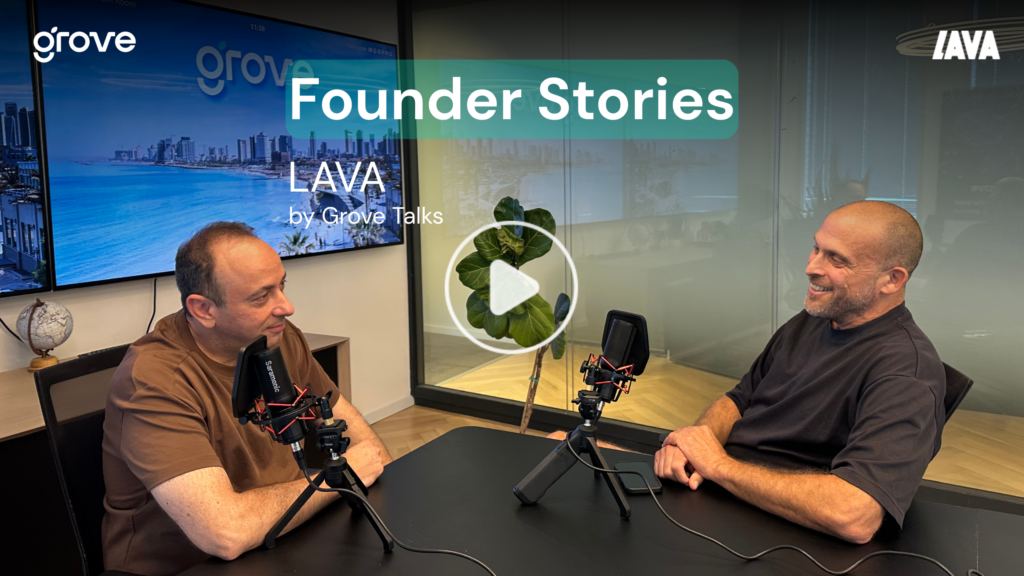
Watch the video here or listen on Spotify.
LAVA’s isothermal cycle is designed to prevent gas from cooling as it expands, so it can keep expanding and doing work. In conventional adiabatic or isentropic cycles, Doron explains, the gas cools as it expands, eventually stopping both the expansion and the work it can produce.
The idea came from Prof. Carmel Rotschild of the Technion, LAVA’s Co-Founder and CTO. The team looked at hydro turbines, which Doron says can reach 90% efficiency by converting height energy into electricity, and asked whether heat energy could be used the same way. Doron sums up the original idea simply: “Let’s make a hydro turbine with heat.”
LAVA developed a new thermodynamic cycle. Doron says the last one was developed 130 years ago, which made the idea difficult even for the team itself to fully grasp at first. It took them two years before they were ready to say it: they had a new isothermal cycle.
The potential difference is significant. Doron says there are about 4,000 gigawatts of steam turbines operating globally today. LAVA is aiming to extract 30% more electricity from the same heat sources, which Doron calculates could translate into another 1,200 gigawatts of power, roughly twice the electricity consumption of the United States, without adding another heat source.
LAVA is aiming to bring its groundbreaking thermodynamic cycle to three major markets, using its heat engine and heat pump across power generation, energy storage, cooling and heating.
For data centers, the immediate problem is simply getting enough power. Demand is outpacing the electricity infrastructure available to support it. Doron points to Texas, where electricity orders have reached 160 gigawatts, while ordering a new gas or steam turbine can mean waiting until 2031. LAVA is aiming to help close that gap with a Carnot battery that combines its heat engine and heat pump to store energy and deliver power around the clock. Just as importantly, the same heat-pump technology can produce cold, giving LAVA a second role inside the data center: cooling, one of the industry’s major challenges.
Geothermal energy offers a different opportunity. The heat is already available 24/7, and LAVA is aiming to extract more electricity from it. Doron cites 5,500 gigawatts of geothermal potential in the U.S., eleven times current U.S. electricity consumption, and says LAVA is working on a more efficient turbine.
LAVA is also targeting district heating in Europe, where Doron describes a market of tens of gigawatts. As countries such as Germany shift heating away from gas and coal, he sees more efficient electric heat as another way the technology could reduce emissions and help address climate change.
For Doron, conviction is not about ignoring criticism. It’s about testing an idea against people whose opinions matter, and knowing when the feedback should change the plan. That process reshaped LAVA itself.
When Doron and Carmel first approached Lior Handelsman, Managing Partner at Grove Ventures, they were pursuing a different market and assumed another startup would supply the engine. Lior challenged both assumptions. The founders eventually faced something they already suspected: the engine did not exist. They could stop or invent one. They chose to invent the engine and left the original market behind, despite years of Carmel’s prior work on the idea.
Doron compares the process to a navigation exercise: go out, gather information, come back, reassess, then go out again. The point, he says, is not to accept every opinion, but to keep questioning your own assumptions and rebuilding your understanding.
In industrial deep tech, the breakthrough is only part of the challenge. LAVA is building a turbine, which means every bearing, component and system has to work before the team can even test the innovation at its center. Doron talks openly about failures, frustration and sleepless nights.
That difficulty shapes the team. LAVA has more than 50 employees, almost all engineers or physicists. Doron interviews every hire himself and says even exceptional talent cannot stay if it doesn’t fit the company’s DNA. Problems get put on the table and worked through, even when the conversations are difficult.
Israel is where LAVA built its team, but Doron says the capabilities needed for mass production are not available locally. The company is working with a German automotive partner on production in Germany, with plans to later replicate it in the United States.
Doron left a business he could have stayed in for life to start again. What followed were years of questioning, changing course and continuing to build a technology with the potential to change the world.
The full episode goes deeper into why Doron chose Lior to be LAVA’s first investor before they had ever met, what it takes to sell new hardware into some of the world’s most conservative energy markets, and what happens inside LAVA when its founders fundamentally disagree.
Explore more Founder Stories →
FAQ
A: LAVA’s isothermal cycle is a thermodynamic cycle designed to prevent gas from cooling as it expands, allowing it to keep expanding and producing work. Conventional adiabatic or isentropic cycles, used in most steam turbines today, lose efficiency because the gas cools as it expands.
A: Data center electricity demand is currently outpacing the infrastructure available to supply it. In Texas, for example, electricity orders have reached 160 gigawatts, while ordering a new gas or steam turbine can mean waiting until 2031. LAVA is targeting this gap with a Carnot battery that combines its heat engine and heat pump to store energy and deliver power around the clock. The same heat-pump technology can also produce cold, giving LAVA a second role inside data centers: cooling.
A: Grove Ventures’ Managing Partner, Lior Handelsman, was LAVA’s first investor and is LAVA’s Chairman of the Board. When founders Doron Tamir and Carmel Rotschild first approached Lior, they were pursuing a different market and assumed another company would supply the engine at the center of their idea. Lior challenged both assumptions, which led the founders to invent their own engine and change the company’s target market.
A: LAVA’s team of more than 50 employees is based in Israel, where the company built its core technology and organizational culture. The company is working with a German automotive partner on production in Germany, with plans to later replicate that setup in the United States as the company scales.
A: LAVA was co-founded by Doron Tamir, its CEO, and Prof. Carmel Rotschild of the Technion, its CTO. Early on, they were joined by Erez Klein, LAVA’s VP Engineering, who brought 24 years of experience at Ormat Technologies.