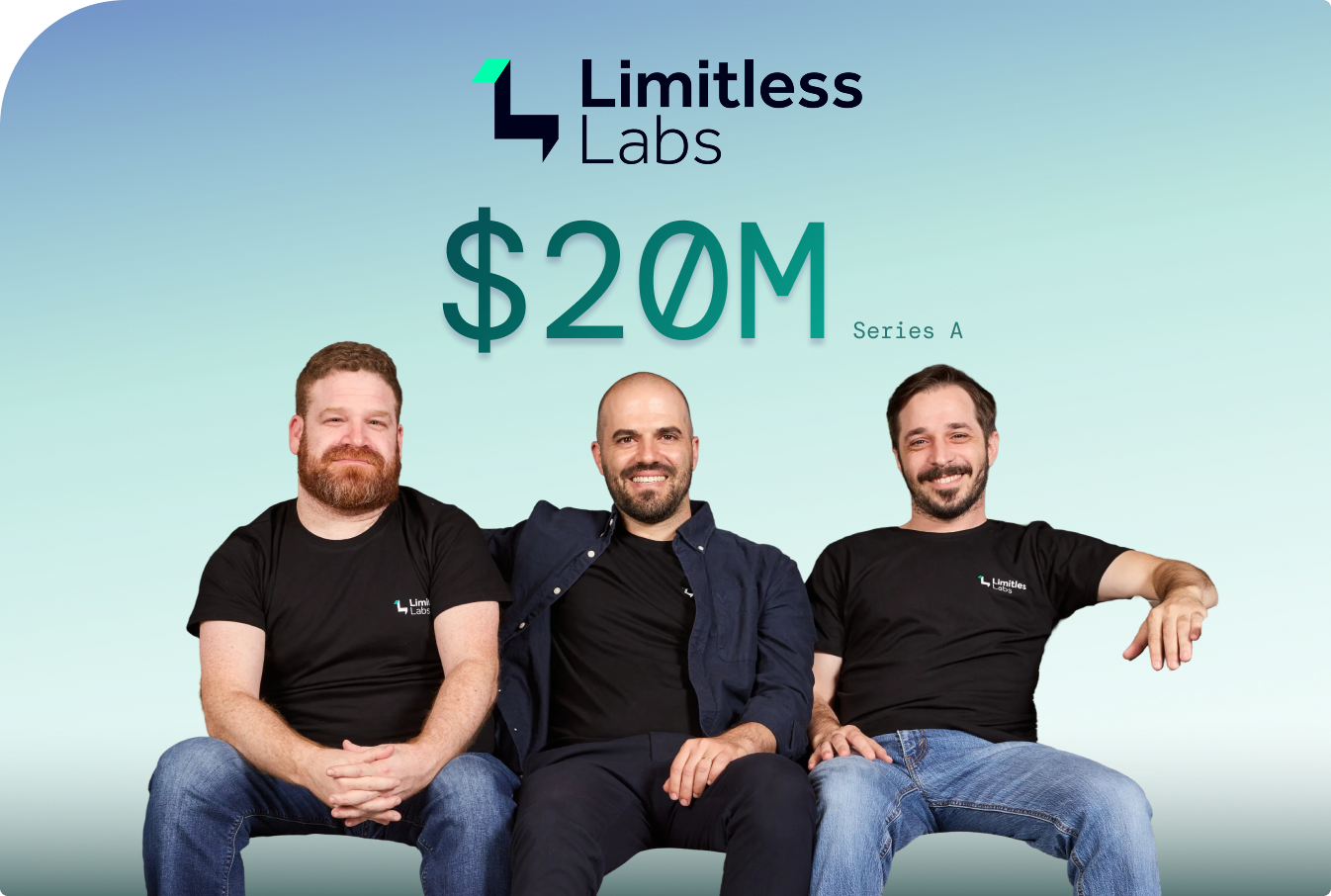
Widely covered across major media, Limitless Labs, formerly LimitlessCNC, announced a $20M Series A co-led by Dell Technologies Capital and Square Peg, with participation from Grove Ventures, Meron Capital, and Kinetica.
Founded in 2024 by David Priev, Assaf Peleg, and Shahaf Finder, the company has raised $27.3M to date.
Limitless Labs is bringing Physical AI into manufacturing through an AI agent that works inside the CAD/CAM systems engineers already use to design parts and program CNC machines.
Powered by a Physical AI Foundation Model built for manufacturing workflows, the platform helps companies capture and scale expert programming knowledge, reducing CNC programming time and accelerating the production of complex, high-precision parts.
Since emerging from stealth, Limitless Labs has expanded from early pilots to full production deployments with manufacturers including Sandvik and Iscar.
Customers use the platform to automate key aspects of CNC programming, with reported reductions in programming time of up to 50%. The platform’s deployment in highly regulated industries such as aerospace and defense also demonstrates its ability to meet demanding security and operational requirements.
Manufacturing is facing growing pressure to produce increasingly complex, high-precision parts while dealing with labor shortages and the loss of experienced programming expertise.
As manufacturers look for ways to capture knowledge, improve productivity, and scale operations, Physical AI is becoming increasingly relevant as AI moves beyond digital workflows and onto the factory floor.
Through its Physical AI Foundation Model, Limitless Labs is helping bring that shift into real-world manufacturing workflows.
The new funding will support the continued development of Limitless Labs’ Physical AI Foundation Model and platform for precision manufacturing.
The company also plans to expand its commercial presence in the United States, expand its deep-tech research lab in Tel Aviv, and roughly double headcount over the next year as it scales adoption across the manufacturing sector.
Read the full article in Calcalist, here.