Explore Founder OS: AI tools to help you build faster
Founder OS Founder OS


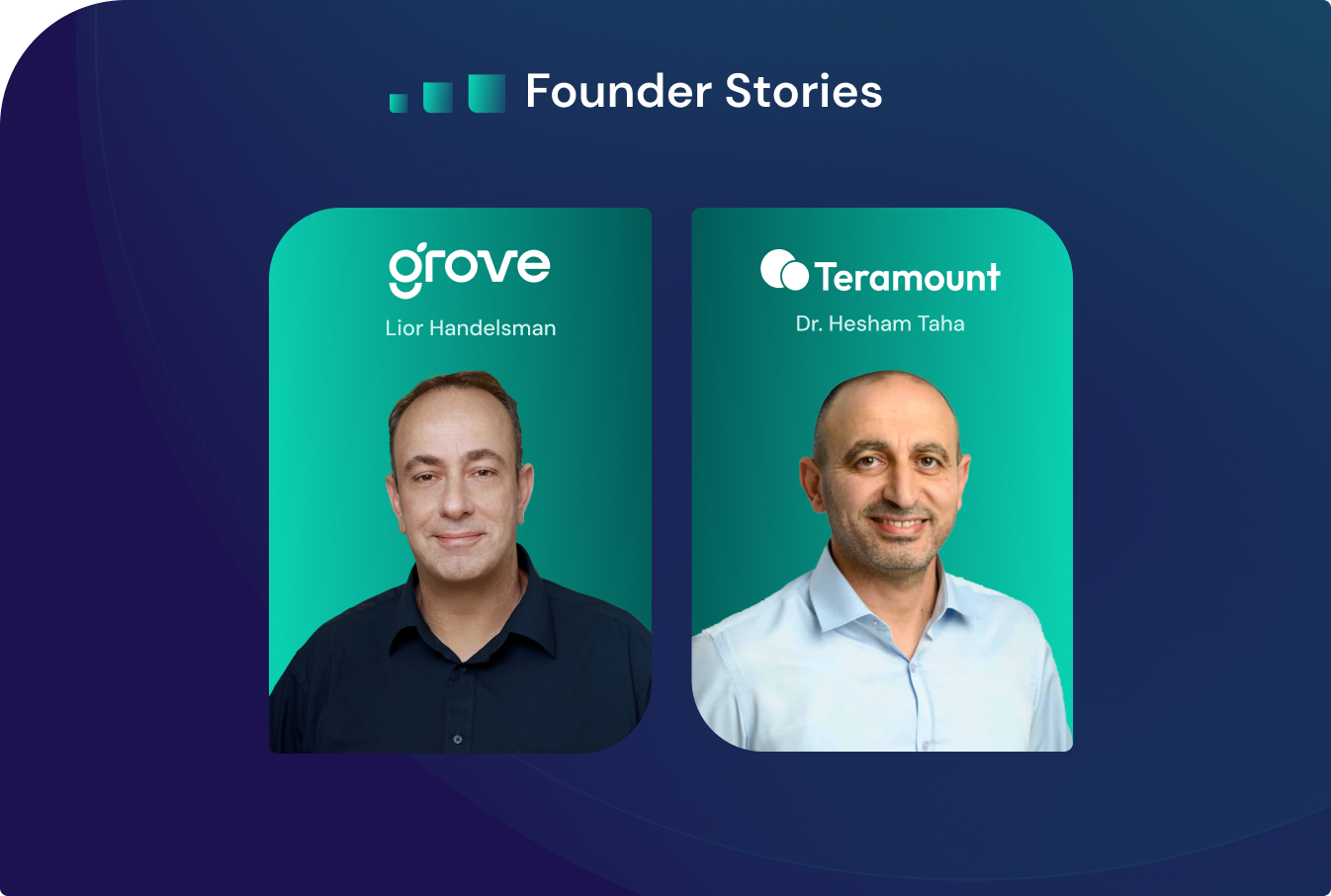
A Grove Talk with Hesham Taha, Co-Founder & CEO of Teramount, and Lior Handelsman
Some founder stories begin even before the market is ready. Before customers are asking for the product. Before investors can clearly see the business model. For Dr. Hesham Taha and his co-founder Abraham Israel, Teramount began with one deep technological conviction: electrical connectivity would eventually hit a wall, and optics would become the way forward.
Years later, that vision became a company at the center of one of the most important shifts in AI infrastructure. It also became a successful exit, with Teramount’s acquisition by Molex, a global electronics leader and connectivity innovator.
Hear the full story – watch on YouTube or listen on Spotify.
Modern AI infrastructure depends on powerful processors that need to communicate with each other at extreme speed. Hesham describes these processors as “brains” that need a fast way to move data between them. Today, one of the strongest candidates for that job is silicon photonics.
The shift is not just about speed. It is also about energy. A major share of processor energy is spent not on computation, but on moving data. By moving interconnects into the optical domain, more power can be used for actual processing.
This is where Teramount comes in. The company solves the interface between optical fiber and the silicon photonics chip, enabling light to enter the chip with the precision and scale required for massive AI data centers.
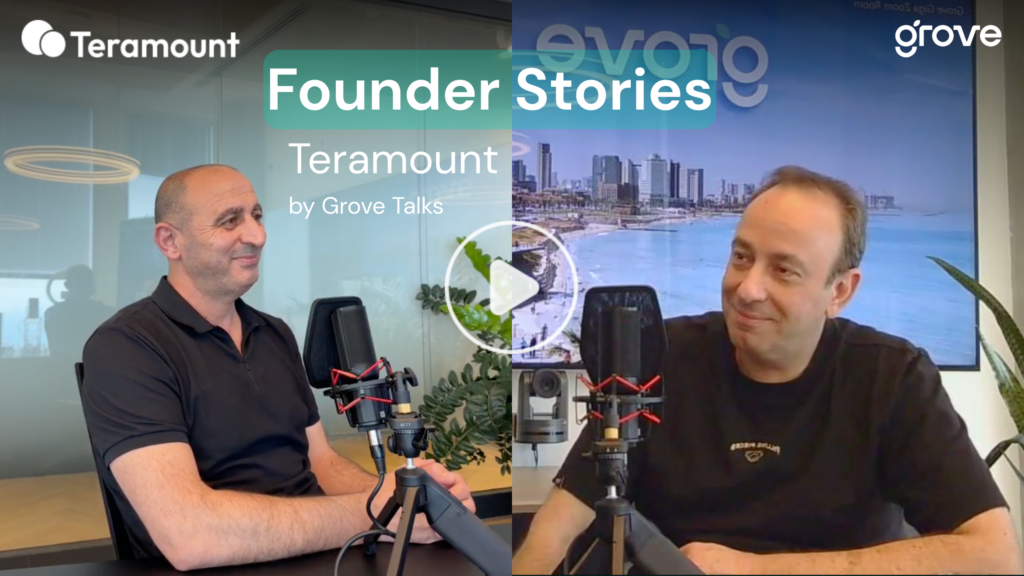
One of the most interesting parts of the episode is how early Teramount began. Hesham looks back 12 years, before there was a clear customer, product category, or AI infrastructure boom. The founders did not start with a polished market map. They started with a hard technological problem.
Early investors asked a simple question: what is the product? At the time, the answer was not obvious. What the founders had was a belief that the semiconductor industry would eventually need optics, and that optics would need to speak the language of semiconductors.
Teramount’s story is also a story of partnership. Hesham and Avi met through their academic paths at the Hebrew University and later worked together. Their relationship grew across research, work, family life, and company building.
Hesham describes them as complementary. For him, the real test of a co-founder relationship is not whether you always agree. It is whether you can disagree, recover, and keep building without ego taking over.
In deep tech, where timelines are long and uncertainty is high, that kind of partnership becomes a foundation for the company itself.
The technology was difficult, but Hesham makes clear that the ecosystem challenge was just as hard.
Customers wanted to know which foundry would manufacture the solution. Foundries wanted to know where the customer demand was. Teramount had to stand between giant players and help bring the pieces together.
That is where investors mattered beyond capital. Hesham points to the value of deep-tech investors who could open doors, support the company through a long journey, and give large customers confidence that Teramount could execute.
The acquisition by Molex is the next phase of that journey. For Teramount, joining Molex means moving faster from startup technology to mass production. The Israeli team will become Molex’s development center for optical connectors, with plans to grow the team, expand capabilities, and bring the technology to market at larger scale.
The exit is not just the end of a founder’s journey. It is the continuation of the original vision: bringing optical connectivity into the heart of the AI infrastructure stack.
The full episode goes deeper – into the “garage before the garage” days, the rejection disguised as a compliment, the investor worth far more than their check, and why their naivety turned out to be their biggest asset.
Explore more Founder Stories →