Explore Founder OS: AI tools to help you build faster
Founder OS Founder OS


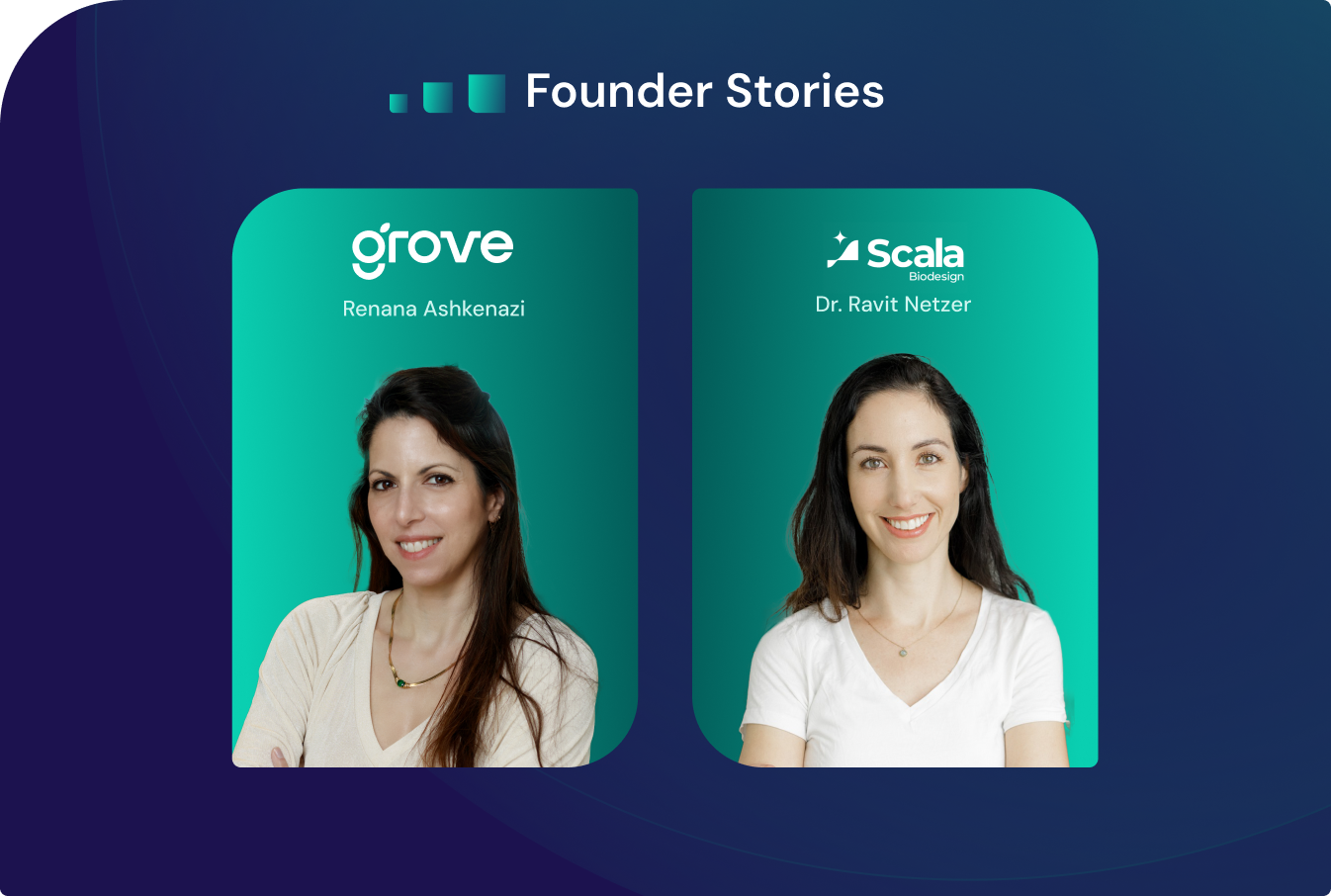
A Grove Talk with Ravit Netzer, Co-Founder & CEO of Scala and Renana Ashkenazi
There’s a moment in many founder journeys that rarely gets written about. It’s not the funding announcement, not the product launch, not even the founding itself. It’s the quiet realization that the path you’re on, however prestigious and structured, is not the one you want to keep walking. For Ravit Netzer, that moment happened inside a lab.
Watch the video here or listen on Spotify.
Ravit’s trajectory looked exactly as expected: a childhood love of science, military research, undergraduate studies in chemistry and biology at the Hebrew University, then a master’s and PhD at the Weizmann Institute. Academia was the natural next step.
But something didn’t fit. The model of individual contribution, chasing grants, publishing papers, felt disconnected from the kind of work she actually wanted to do. She was drawn to large teams, real business models, and tangible impact. She started exploring a different path, without really knowing what it was called.
That exploration led her to co-found Scala, a company building computational technologies for protein engineering – the molecules that underpin modern medicine, agriculture, food, and diagnostics.
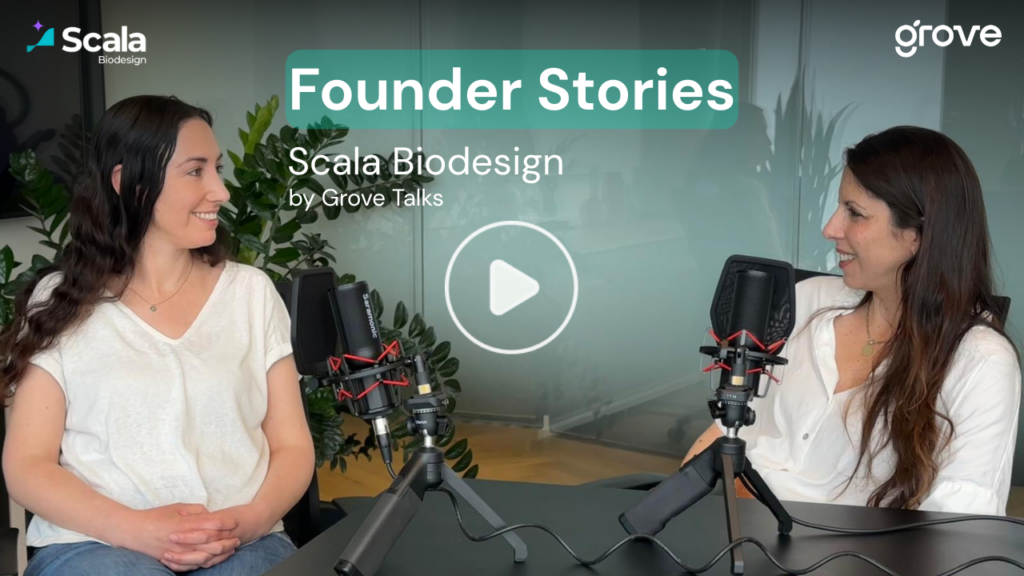
Ravit co-founded Scala with Adi Goldenzweig, her collaborator from Weizmann, where the two had worked together for nearly a decade. Everyone around them said they were the same person. In practice, they had to become two very different ones.
Early on, they were both co-CEOs. That didn’t last long. It was Renana who pushed them to split: divide the roles, even if you have to flip a coin. What followed was a deliberate split- Adi into technology and research, Ravit into running the company – that shaped everything about how Scala operates. The co-founder relationship is one of the most underrated factors in a startup’s success. Theirs is a case study in both its strengths and its honest complications.
There’s a common assumption that the precision and absolutism of scientific thinking are incompatible with the ambiguity and compromise of the business world. Ravit doesn’t buy it.
Talented people, she argues, tend to be talented across domains. The real adjustment isn’t capability, it’s operating mode. Science chases absolute truth. Business operates in useful truth. Making that shift, consciously, is what the transition actually requires.
She rolled her eyes when the topic came up. Not because the technology isn’t real, she believes it is, but because the conversation around it has become dangerously flat.
Her customers, the scientists at large pharmaceutical companies, are grounded and clear-eyed about where AI can genuinely help and where it falls short. The problem is everywhere else: the hype, the overclaiming, and the flood of new companies built on shallow assumptions about what AI can do in complex biological systems.
In biology, a tool that seems to work but doesn’t is costly in a very specific way. Failed experiments are expensive. Over-promising leads to disillusionment. And disillusionment makes the whole field harder for everyone doing serious work in it.
Ravit’s journey reflects a deeper shift: from curiosity about how the world works, to a commitment to changing it. Science didn’t disappear from the story – it just expanded.
The journey from molecule to market is not linear. Neither is the journey of the people building it. The right people around you, a co-founder, advisors and a community, aren’t just nice to have. They’re what makes the whole thing possible.
To hear the full conversation, including Ravit’s honest take on fundraising, hiring with no prior work experience, and what she’d tell early-stage founders with academic backgrounds, listen to the full episode.
Watch the video here.