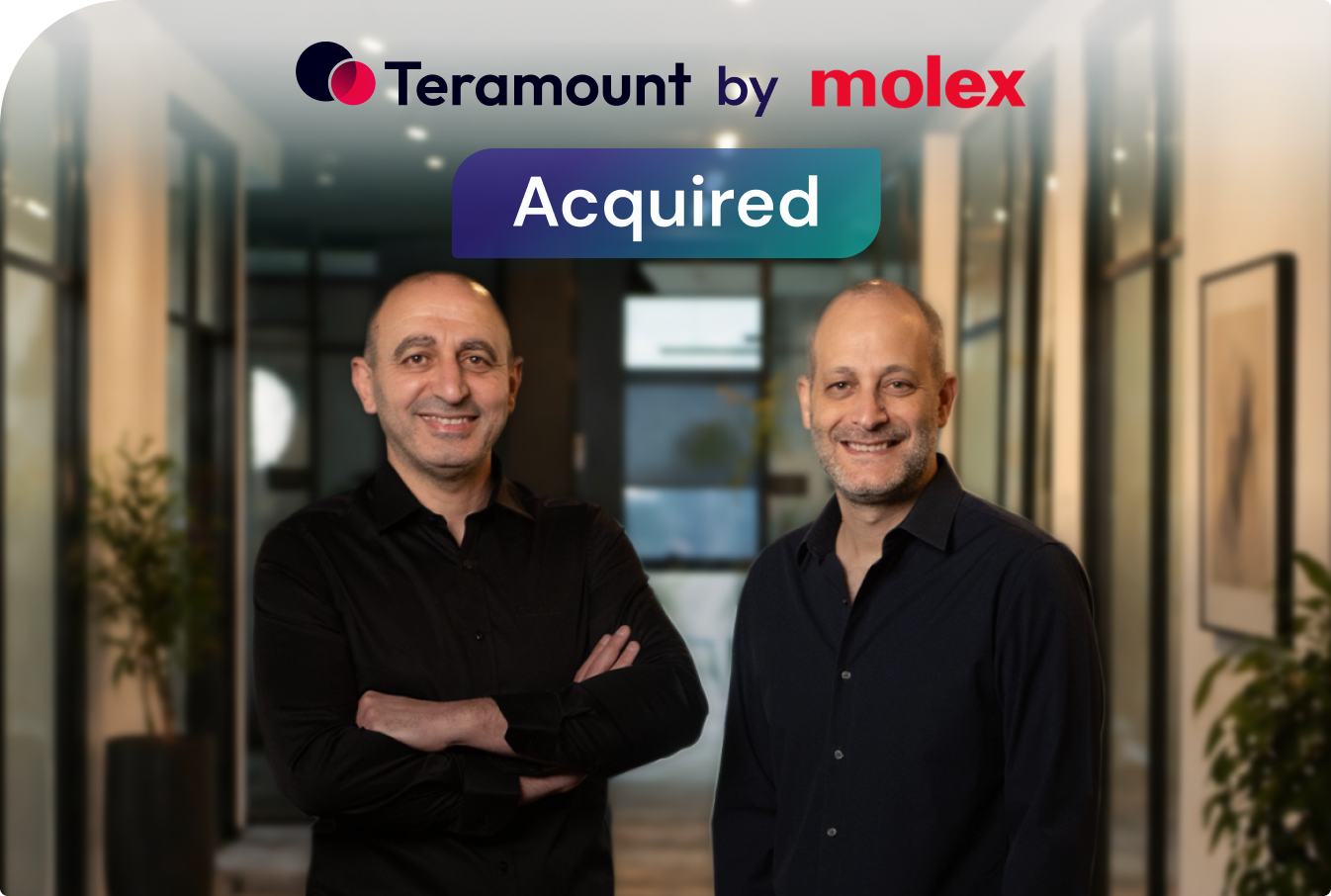
Teramount, an Israeli startup developing fiber-optic connectivity solutions for AI infrastructure and data centers, has been acquired by Molex, a global electronics leader and connectivity innovator. The company will continue operating as an independent engineering center from Jerusalem, supporting Molex’s global optical capabilities.
As AI systems scale, data centers are hitting fundamental limits in moving massive volumes of data efficiently, with traditional electrical interconnects struggling to keep up with the speed and energy demands of modern workloads.
Teramount identified this bottleneck early, in 2015, and addresses it by enabling direct optical connectivity between chips, unlocking faster data transfer and significantly improved energy efficiency.
The company integrates optical fibers directly into semiconductor chips through proprietary designs, enabling scalable, high-performance communication for AI and high-performance computing systems.
Its approach is designed to support next-generation architectures where optical connectivity becomes a core part of the chip itself.
Grove Ventures backed Teramount based on its early identification of a critical infrastructure need in the data center market.
“Early identification of infrastructure needs in the data center market was the basis of our investment in Teramount,” said Lior Handelsman, managing partner at Grove Ventures. “What drove the company’s value is the team’s ability to develop technology that has no substitute in the market.”
The deal reflects growing demand for optical solutions as AI infrastructure expands.
As data movement becomes a core limitation, technologies that improve bandwidth and efficiency are becoming essential to enabling the next generation of AI systems.
Read the full article here on Ctech.