Explore Founder OS: AI tools to help you build faster
Founder OS Founder OS


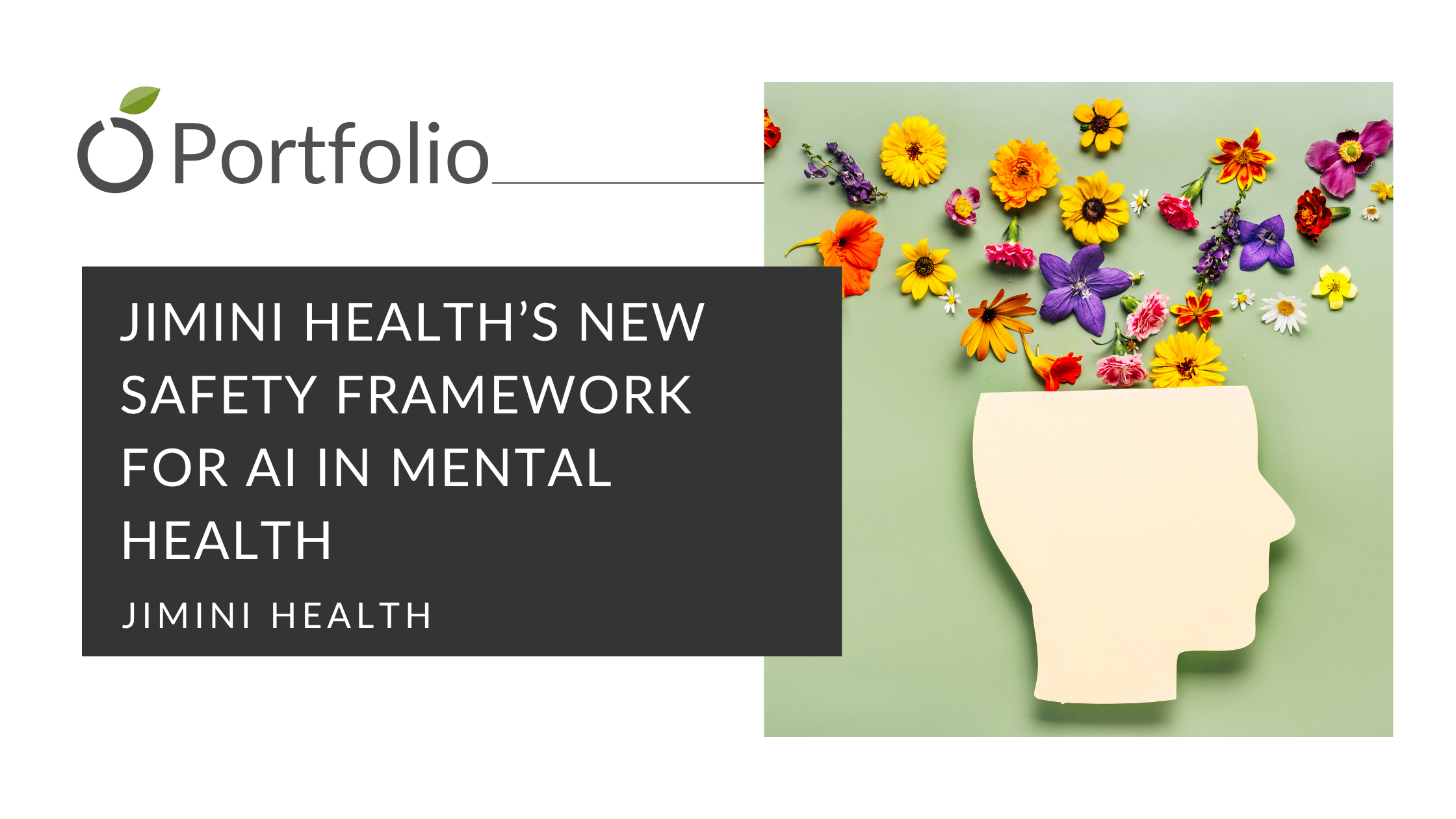
In a world where mental health challenges are surging and technology is reshaping care delivery, how do we ensure AI serves as a trusted ally rather than a risky substitute? Jimini Health’s latest white paper provides a timely answer.
The past few years have been an emotional rollercoaster for many, marked by uncertainty, rapid change, while experimenting a heightened awareness of our mental well-being. As more individuals seek care, the demand for mental health services far outpaces the availability of qualified professionals.
AI tools, particularly large language models (LLMs), have emerged as a potential solution to bridge this gap. Yet, their rise has sparked debate about safety, ethics, and the preservation of the human connection at the heart of therapy.
Jimini Health’s new white paper, “A Clinical Safety Framework for AI in Mental Health,” aims to resolve these tensions by setting clear, actionable principles for responsible AI use in therapy settings.
In the words of Luis Voloch, Co-Founder & CEO of Jimini Health:
“We built our system to prioritize safety from the start, rather than retrofitting oversight into an existing product. AI should enhance the human connection and trust in clinicians—not take that away.”
This belief underpins the entire framework. Rather than positioning AI as a replacement for therapists, Jimini Health emphasizes AI as a supportive tool, one that expands access while maintaining clinician oversight and ethical safeguards.
The framework highlights four main principles:
As Dr. Johannes Eichstaedt, Chief Scientist at Jimini Health, puts it:
“There is a clear mismatch between the number of people seeking care and the capacity of the clinical workforce. Our goal with this framework is to show that AI can help address the shortfall while still adhering to clinical standards.”
The white paper highlights a staggering figure:
Over 60% of individuals experiencing mental health challenges in the U.S. never receive adequate care due to workforce shortages and accessibility barriers.
By incorporating AI as a clinical assistant, Jimini Health projects that clinician availability could increase by up to 30%, therefore enabling more patients to access timely, high-quality support.
Jimini Health has developed Sage, an AI-powered assistant that helps clinicians by:
Importantly, Sage operates under strict clinician supervision, ensuring that no critical decisions are made without professional oversight.
The company also tests all tools within its own clinical practice before making them widely available, ensuring safety and effectiveness are never compromised.
To reinforce its mission, Jimini Health has expanded its advisory board with industry leaders like Dr. Pushmeet Kohli (Google DeepMind) and Dr. Seth Feuerstein (Yale’s Center for Digital Health and Innovation), further validating its commitment to ethical, evidence-based AI solutions.
The future of mental health care will likely be hybrid—where AI amplifies human capacity but never replaces the unique empathy, intuition, and expertise of trained professionals.
Jimini Health’s framework serves as a blueprint for how to do this responsibly, ensuring that AI in mental health enhances, not erodes, trust and connection.
🔗 Want to dive deeper? Read the full article on Athletech News:
AI Must Support, Not Replace, Mental Health Professionals – Jimini Health