
Why We’re Fired Up About Onfire
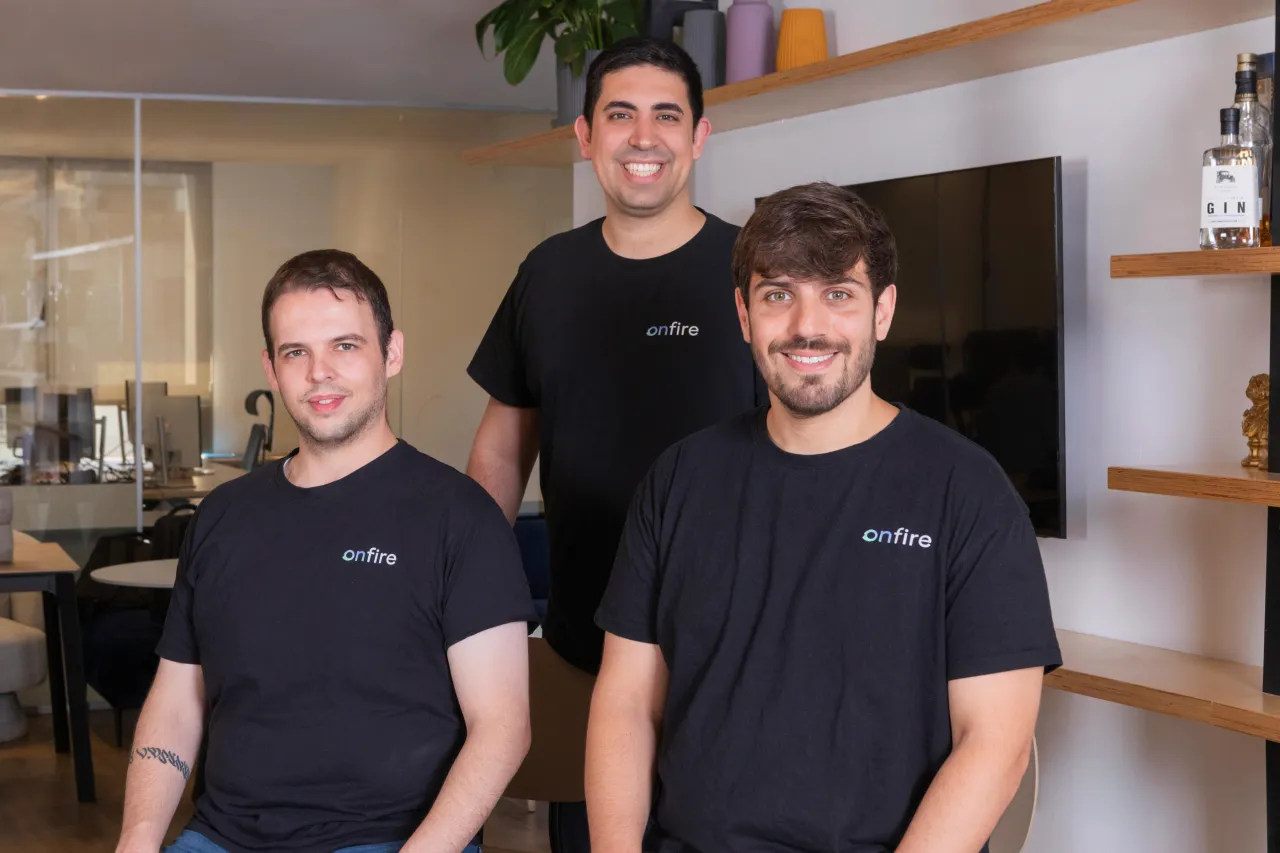
At Grove Ventures, we pride ourselves on partnering with founders at the very start of their journey. We believe in shaping what’s next – we dive in early, love being helpful ideation partners, and help navigate the earliest stages of building transformative companies that power the future. Onfire is a great example.
When we first met Tal, Nitzan, and Shachar, they didn’t have a startup yet. They didn’t even have a defined idea. What they had was something harder to find and impossible to fake: the kind of team dynamics you only see in teams who’ve been through real battles together.
These three weren’t just former colleagues; they spent years building one of the most demanding operational AI systems we’ve encountered: a proprietary entity resolution engine that fused data from multiple sources, delivering real-time, high-accuracy intelligence at scale. This wasn’t academic theory; it was deployed in production under high stakes, ultimately earning Israel’s top national security award.
The question wasn’t whether they could build a system like that again. It was where to point it.
As Onfire took shape, their complementary skills came to life. Tal led product vision and GTM strategy. Nitzan and Shachar mastered engineering, data, and operations. This blend of strengths and deep trust enabled them to build an ambitious system at record speed. That led to the critical question: how could that level of technical and operational excellence be harnessed for a commercial problem with real impact?
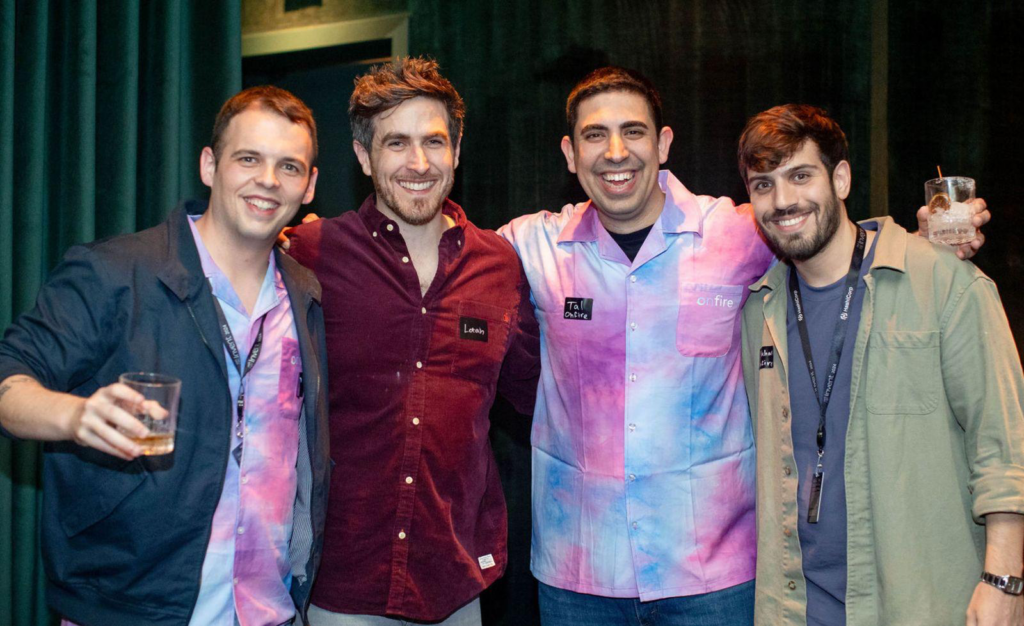
Nitzan, Lotan, Tal and Shachar hustling at AWS Re:Invent 2024
Insights Spark Innovation
The beauty of working with this team was that we didn’t need to come up with the idea for them. We simply focused on creating the right conditions: sharp questions, brutal honesty, and a shared belief that many market inefficiencies are actually data problems in disguise. That made our collaboration feel natural.
The first real spark arrived over a late-night dinner of burgers at our office, as the idea of GTM for software infrastructure surfaced and everything began to click. From that moment, momentum took over and the vision accelerated. That observation didn’t come from nowhere; it had a big ingredient of serendipity.
In the weeks before meeting Onfire, we had completed our analysis of go-to-market strategies for infrastructure companies that was shaped by direct input from more than a dozen GTM executives and industry leaders (and was later published in our Shift Happens report). When we met Onfire, we leveraged that collective expertise and our network to launch a concentrated validation sprint of 30 in-depth conversations in just a few weeks. The process revealed fresh and actionable patterns.
Even with a strong product and market, IT companies targeting technical buyers often face significant go-to-market challenges. With over five trillion dollars in IT budget spent annually, decision-making is distributed, technical, and frequently opaque. Every enterprise in the world has its own evolving stack, its own buying committee, and its own internal language. Effective selling becomes nearly impossible without context.
And it’s not just complexity. It’s fragmentation. Buying decisions are often made bottom-up, with open source adoption leading the charge. Individual engineers and architects build consensus through Slack threads, GitHub issues, internal meetups, and influencer blog posts. By the time a deal lands on a CRO’s desk, the real decision has already happened.
It’s not just hard. It’s unscalable without context.
And that’s where the breakthrough happened.
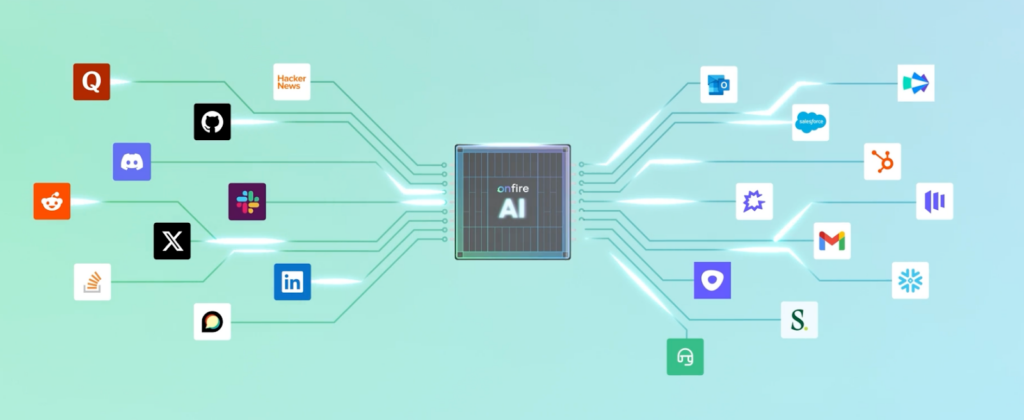
Flowchart of the Onfire platform
Rethinking Data-Driven GTM
What if, instead of guessing which potential customer is ready to buy, you actually knew? What if you knew the tech stack and the key technical decision makers in each department of every company? What if you could accurately assess real-time behavior across your competitive landscape and measure the impact of your marketing spend as it happens?
Onfire built the crystal ball that has all this data. They built a data engine that captures signals, connects the dots, resolves anonymized information, and continuously updates insights from a massive array of sources: tens of thousands of Slack and Discord communities, GitHub repos, anonymized social media posts, job postings and social profiles, Quora and Stack Overflow posts, meetups, and fragmented conference signals. Every week, billions of structured and unstructured signals, surface-level and deep, are merged into one holistic picture.
Then comes the magic. Using AI, they turn this messy, distributed internet soup into high-resolution intelligence. Not “Company X raised a round” but “Company X just hired a Staff ML Engineer, is moving from Snowflake to Databricks, and sent two engineers to a closed AI infra meetup.”
Watch how Onfire helps to find specific audiences with unique data and proprietary AI
It’s like giving GTM teams the same kind of visibility and signal advantage that product teams get from real-time usage analytics. Only now it’s for the outside world.
Most AI GTM startups today start with action: “Let’s write messages. Let’s automate outbound.” Onfire flipped that script. They started with the data, believing that no automation is useful unless it’s grounded in a real, accurate, and live understanding of the market. Only once they built a credible, differentiated source of truth did they begin layering on automation. That’s the Onfire difference: data first, action second.
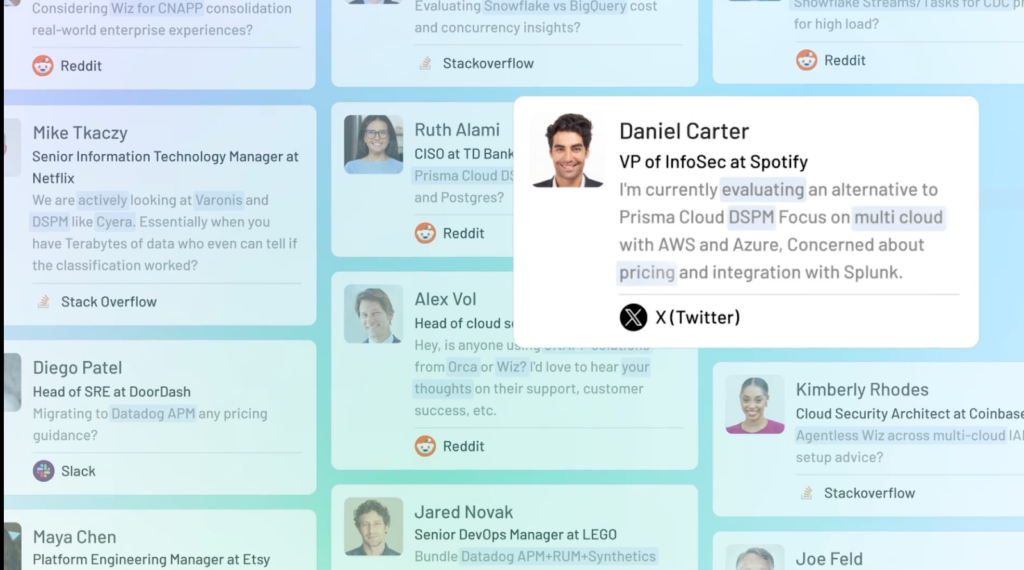
Buyer profile visualization on the platform
And this is just the beginning.
The bigger vision? Onfire isn’t just building another GTM tool. They’re building a new source of truth – one that continuously learns from the external world and delivers real-time, contextualized insight straight into the workflows of go-to-market teams. A system that doesn’t just track the past but predicts what’s next. That’s what makes it so powerful. And so inevitable.
From No Idea to Category Creator
Following the early validation sprint, the team went even deeper. They talked to over 250 GTM and revenue leaders while building their data engine in parallel. In less than a year since launching their private beta, Onfire has already landed dozens of customers, from large public category leaders to growth-stage startups and supported over 50 million dollars of closed deals. The energy around them is palpable, and the pace is only accelerating.
Today, Onfire is helping dozens of companies build better pipeline, faster. But more than that, they’re showing a new path for what go-to-market can look like when it’s built for the way the world actually works today.
We backed this team not just for what they’re building, but for how they listen, how they think, and how they move. It’s rare to find a group that combines such deep technical chops with this level of humility and urgency.
So if you’re a founder still figuring out what to build, but you know you’ve got the right team, let’s talk. Onfire is proof that the idea can follow. It’s a reminder that the right team, with the right mindset, can uncover and build into a massive opportunity. Sometimes all it takes is the right spark.
(And yes, if you’ve read our Shift Happens report, you’ll see why this space was already on our radar.)

Lotan Levkowitz
Managing Partner
[email protected]